
It was nearly 8:00 PM.
Dr. Arun had finally finished seeing his last patient for the day. The clinic was quiet now. The treatment bed was empty, the files were stacked on the desk, and he was getting ready to leave.
As he quickly reviewed the day's appointments, one thought suddenly came to mind.
“Whatever happened to Ravi?”
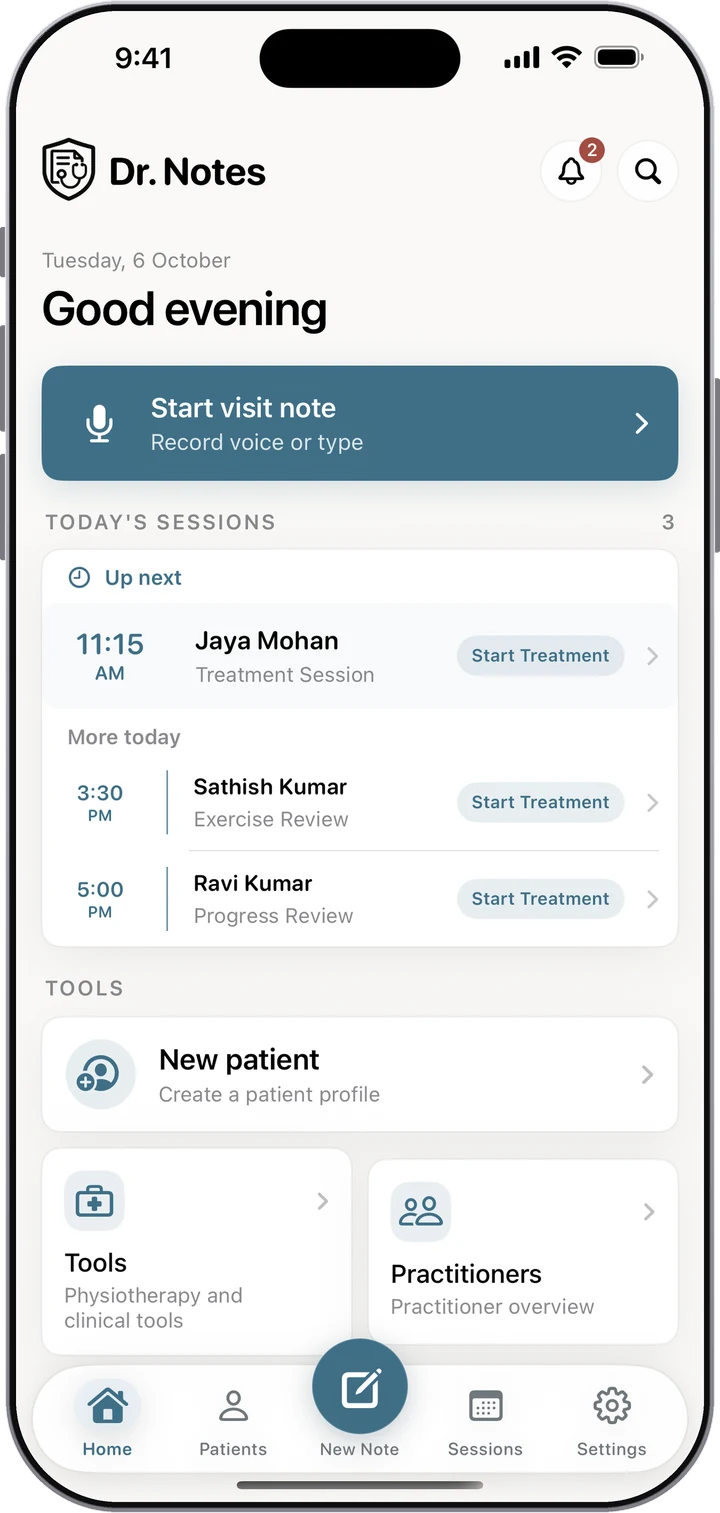
Ravi had visited the clinic a few weeks earlier with severe lower back pain. After a few physiotherapy sessions, Dr. Arun had advised him to return for a progress review.
But Ravi never came back.
Not because he had fully recovered. Not because he had chosen another clinic. He simply forgot.
And the clinic forgot to follow up.
For many physiotherapists, dentists, and small clinic owners, this situation feels painfully familiar.
Patients are told to return in one week, one month, or after a few sessions. The instruction is written somewhere. The patient leaves. The clinic gets busy. The patient gets busy. And slowly, the follow-up disappears.
Over time, treatment continuity suffers, patients drop out silently, and clinics lose valuable repeat visits that could have been saved with one simple reminder.
The Hidden Cost of Missed Follow-Ups
Most clinic owners spend a lot of time and energy bringing in new patients.
But many do not notice how many existing patients quietly disappear after their first few visits.
A missed follow-up may look like a small gap in the schedule, but it can affect both patient care and clinic growth.
- Delayed recovery
- Interrupted treatment plans
- Poor treatment compliance
- Empty appointment slots
- Lost revenue
In many cases, the patient did not leave because they were unhappy. They simply forgot. And the clinic did not have a system to bring them back.
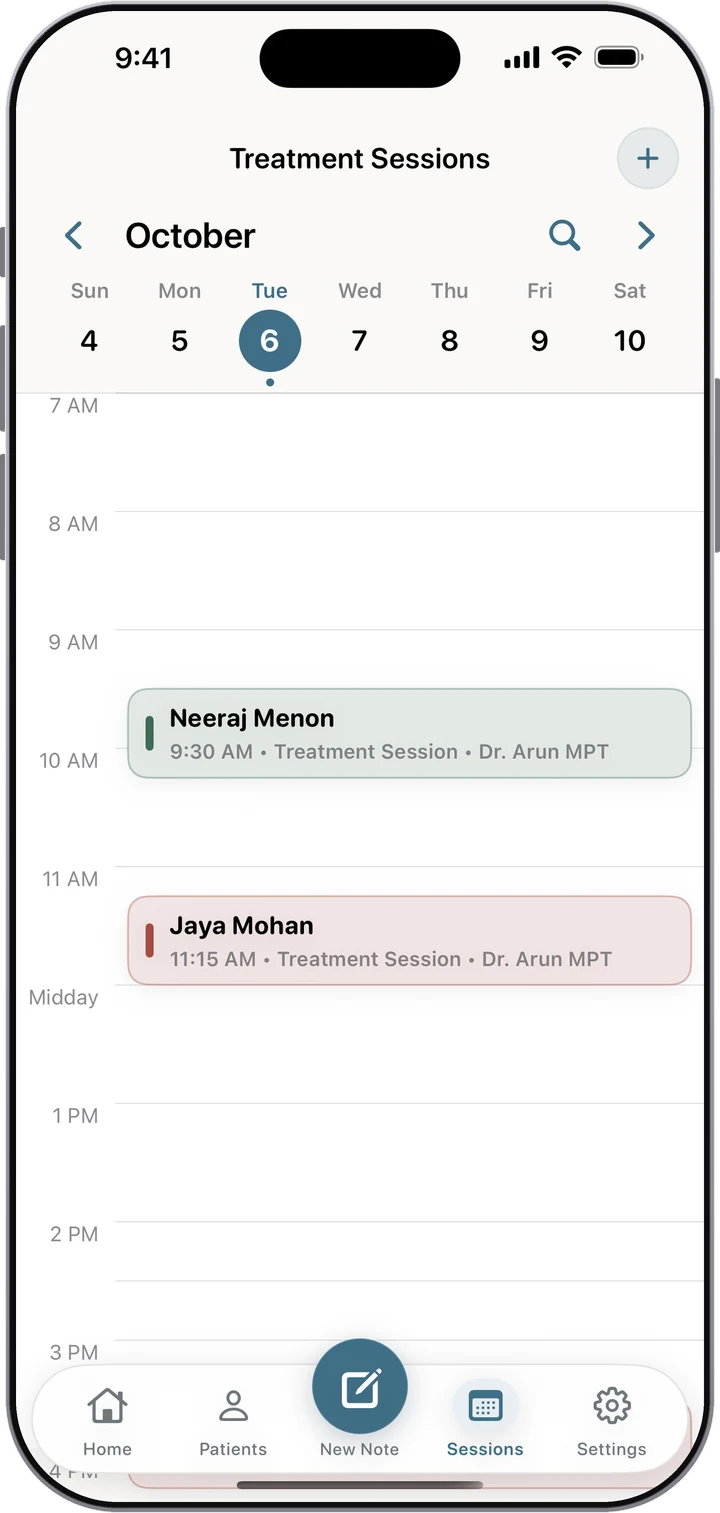
Why Small Clinics Struggle with Follow-Ups
In larger hospitals, follow-ups are usually handled by a front-desk team.
Someone schedules the next appointment. Someone tracks review dates. Someone calls the patient. Someone sends reminders.
But small clinics often do not have that support.
In many physiotherapy clinics, dental clinics, and independent practices, the doctor or therapist has to manage everything — patient care, notes, appointments, billing, and follow-ups.
At first, this may feel manageable. But as the number of patients grows, manually remembering every review date becomes difficult.
One missed reminder becomes two. Two missed reminders become many. And slowly, patients who were supposed to return simply disappear from the clinic’s follow-up cycle.
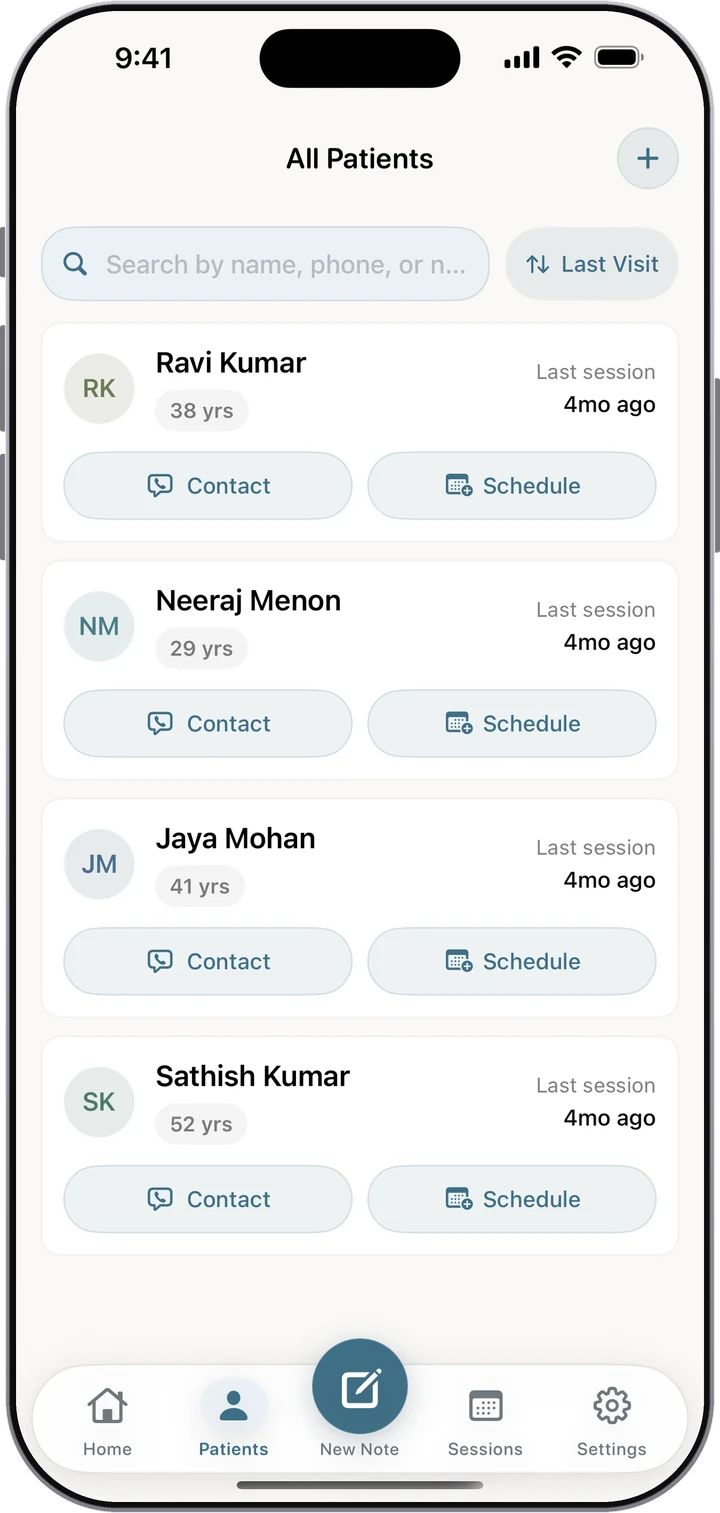
Ravi's First Visit
One afternoon, Ravi Kumar walked into Dr. Arun's clinic with persistent lower back pain.
He had been struggling for nearly three weeks. Sitting for long hours at work made the pain worse, and even simple daily movements had started to feel uncomfortable.
After examining him, Dr. Arun opened Ravi's profile in Dr. Notes and recorded the assessment.
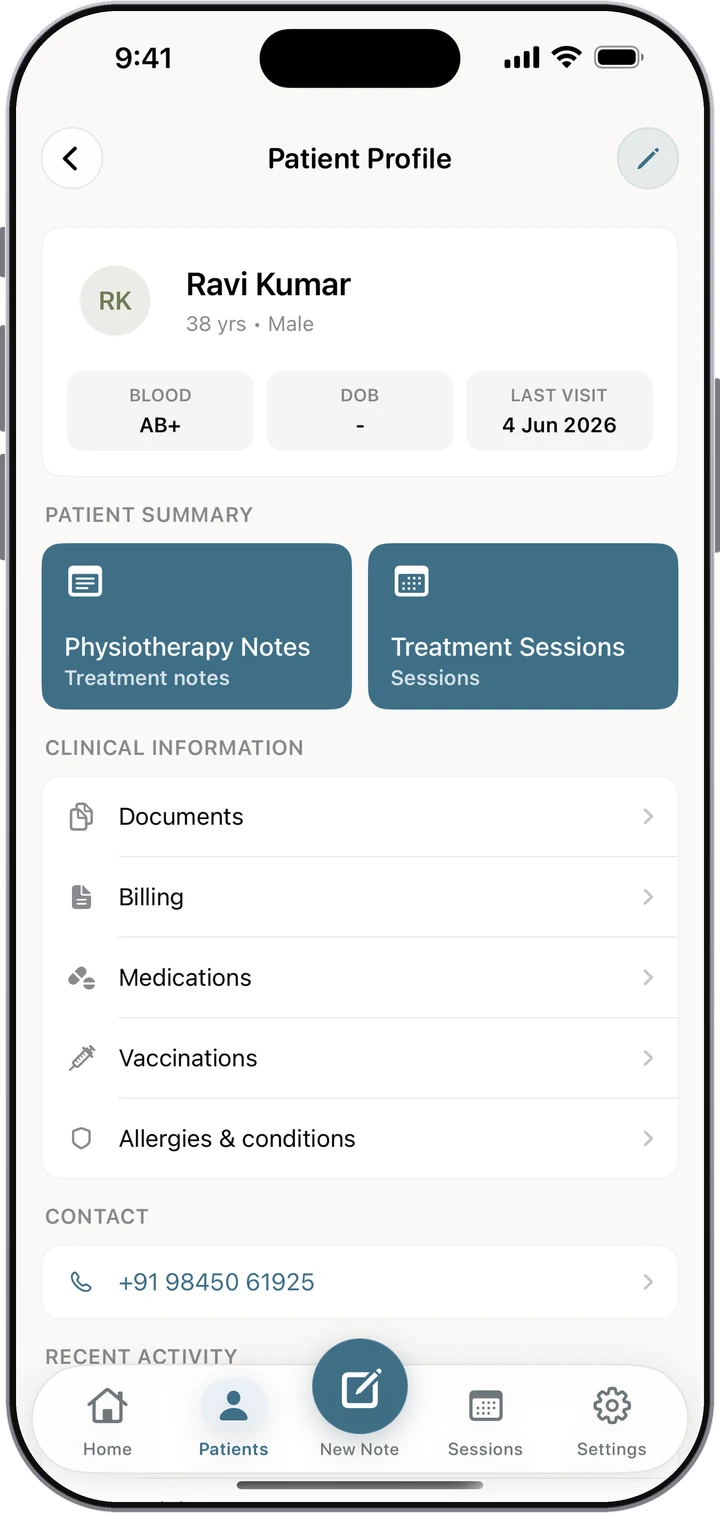
Recording the Clinical Assessment
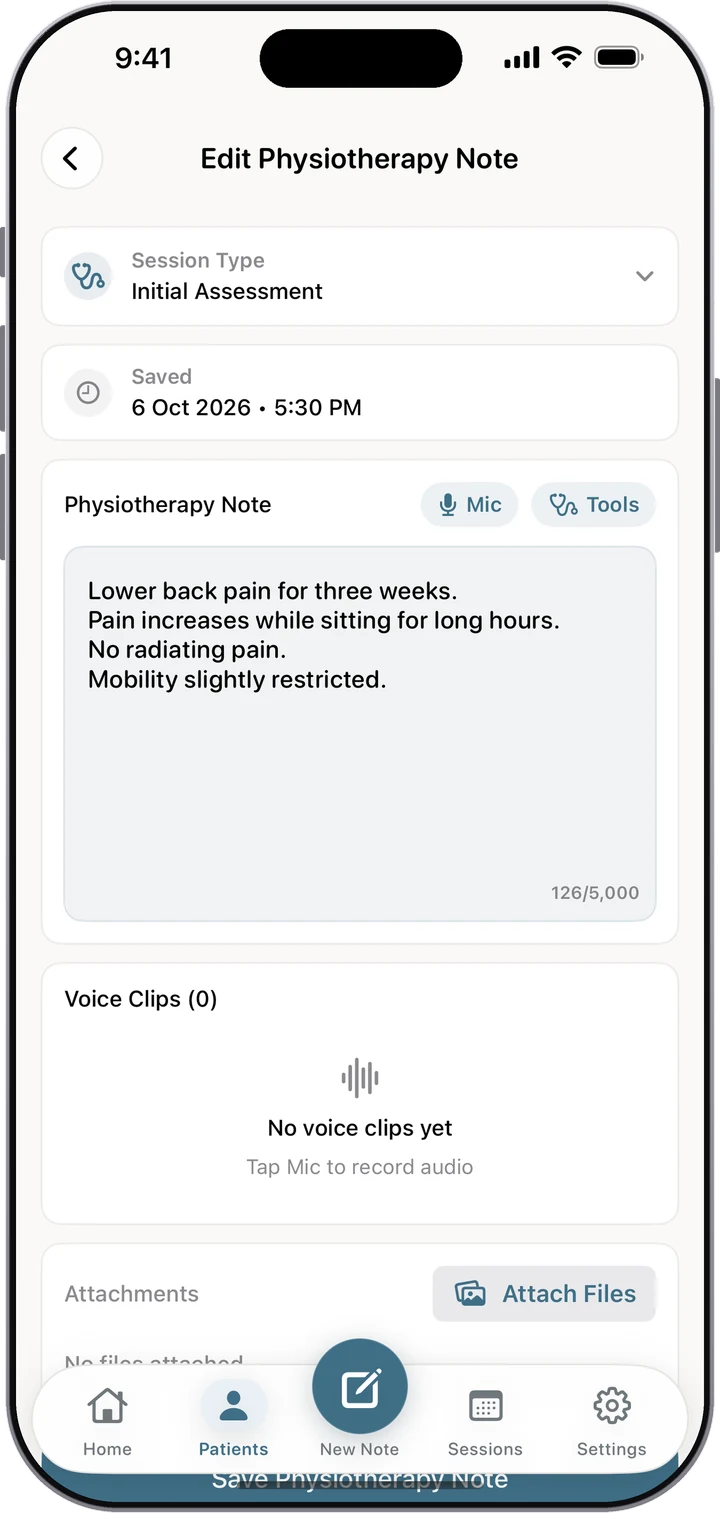
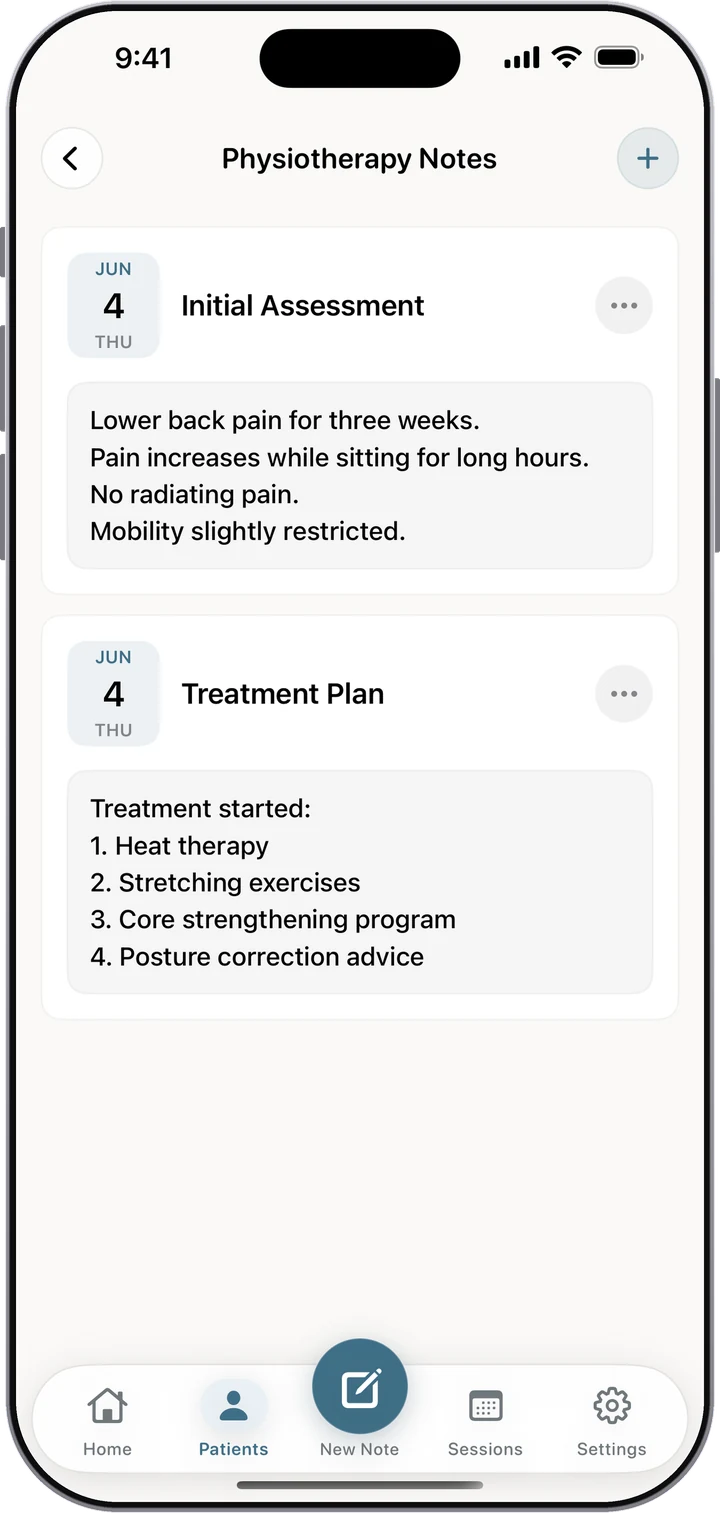
Dr. Arun documented Ravi’s condition clearly in the Clinical Notes section.
- Lower back pain for three weeks.
- Pain increases while sitting for long hours.
- No radiating pain.
- Mobility slightly restricted.
This assessment was saved directly into Ravi's patient record.
No paper files. No notebooks. No loose sheets. Everything stayed organized in one place, ready to continue from the next visit.
Creating a Treatment Plan
After completing the assessment, Dr. Arun explained the treatment plan to Ravi.
The goal was not just to reduce the pain, but to address the underlying causes and help him return to his normal daily activities.
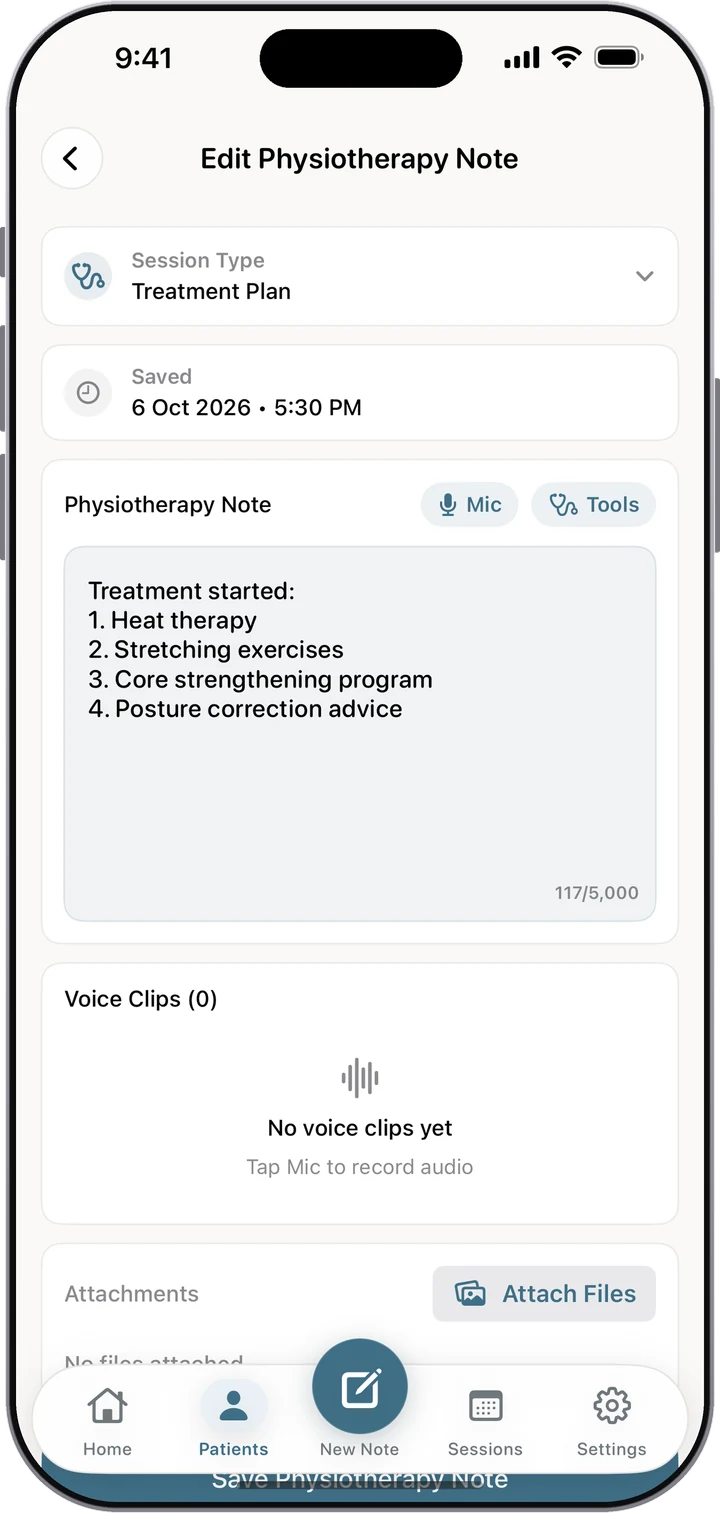
Using Dr. Notes, Dr. Arun recorded the treatment plan directly in Ravi's clinical record.
- Heat Therapy
- Stretching Exercises
- Core Strengthening Program
- Posture Correction Advice
With every visit, new notes and progress updates were added to Ravi's record. Over time, this created a complete treatment history.

Try Dr. Notes on Mobile
- Secure On-Device Data
- Instant Voice Notes
- Simple Patient Management


The Most Important Step: Scheduling the Follow-Up
After completing Ravi's assessment and treatment plan, Dr. Arun did something that many busy clinics often forget.
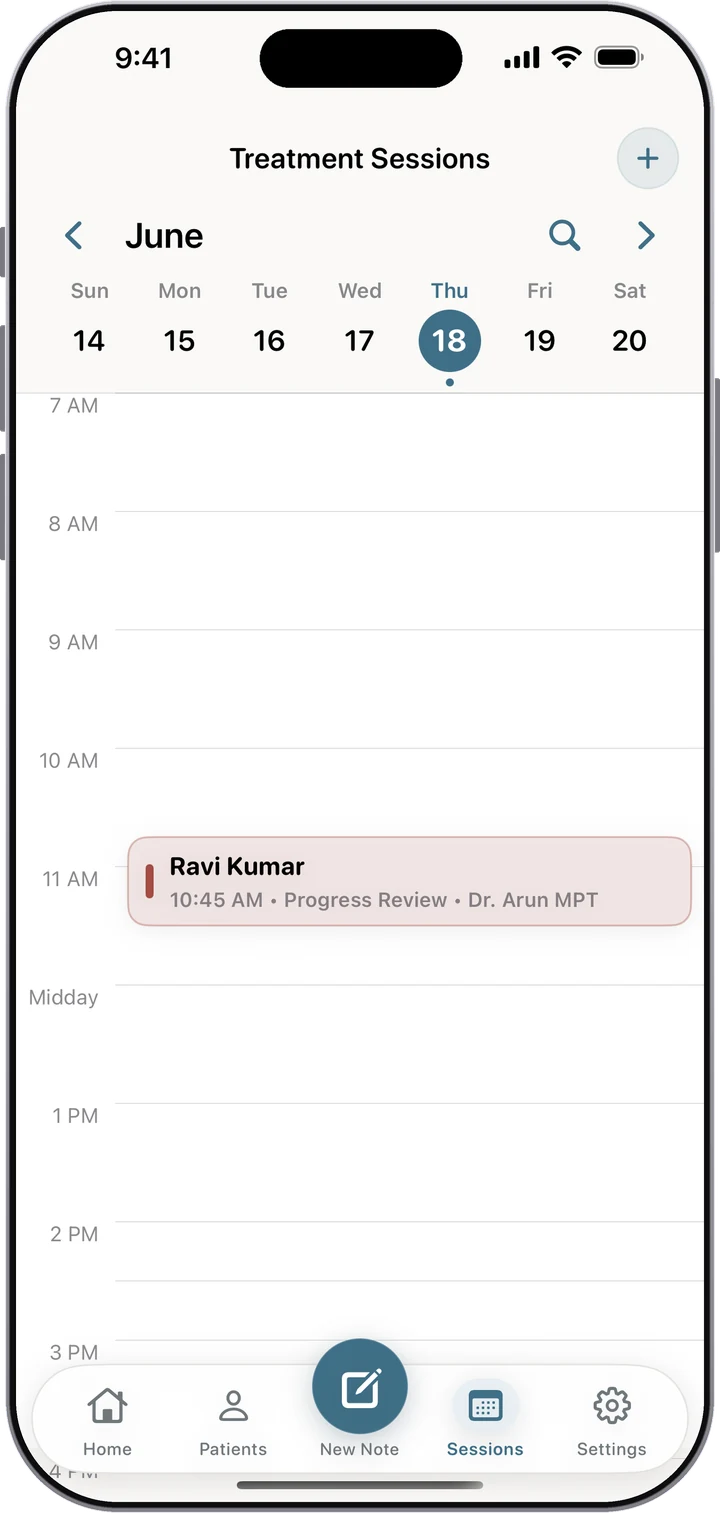
Before Ravi left the clinic, he scheduled the next appointment immediately.
- Date: 18 June 2026
- Time: 10:45 AM
- Purpose: Review after 7 physiotherapy sessions
This simple habit transforms a future follow-up from a possibility into a planned event.
Building a Recall System with Dr. Notes
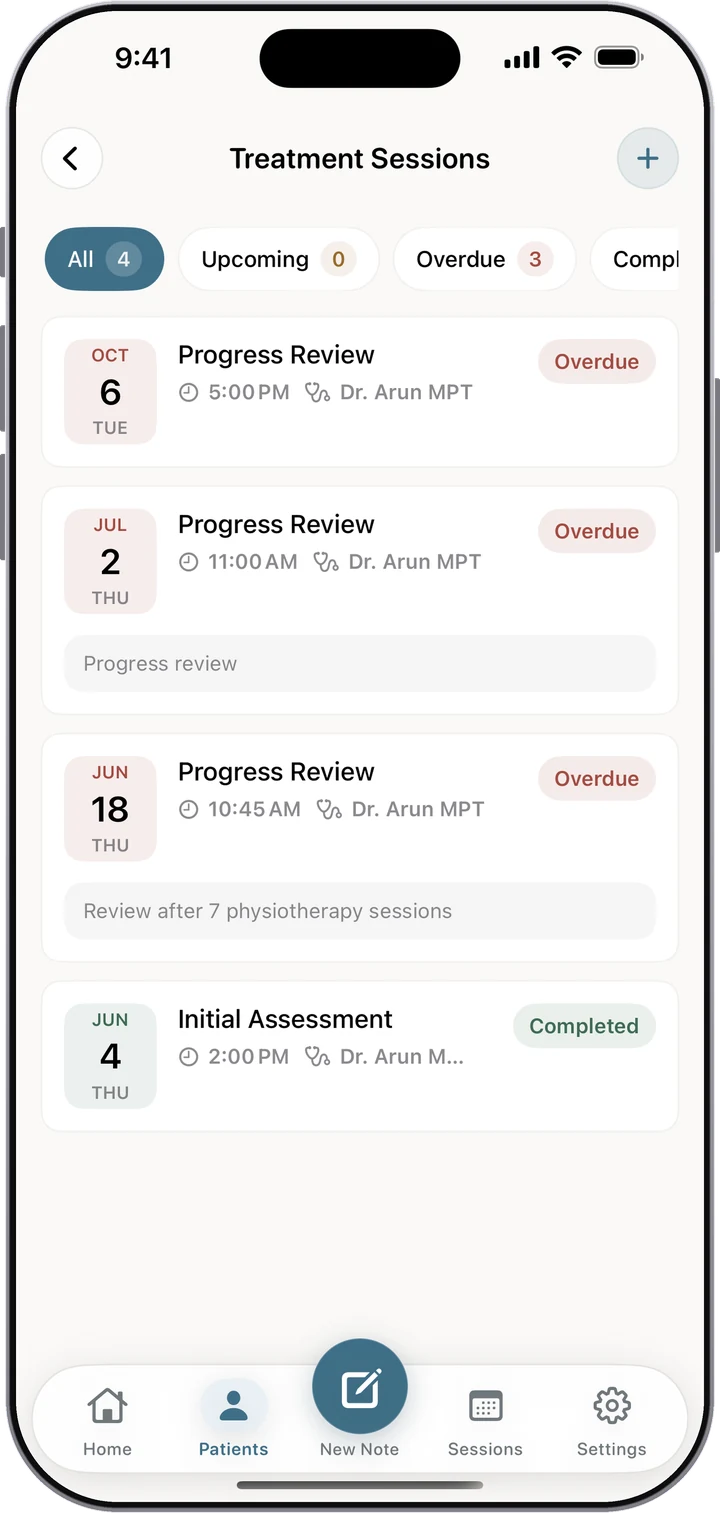
Once Ravi's follow-up appointments were scheduled, Dr. Notes started working like a simple recall system for the clinic.
Dr. Arun no longer had to remember every patient manually.
The clinic could instantly view:
- Upcoming follow-ups
- Progress reviews
- Missed appointments
- Due recalls
For Ravi, the system clearly showed:
- 18 June 2026 — Review after 7 physiotherapy sessions — Pending
- 2 July 2026 — Progress Review — Pending
Instead of depending on memory, paper notes, or a receptionist, the clinic always knew which patients were due to return.
Reminding Patients Before They Disappear
As Ravi's review date came closer, Dr. Notes helped the clinic stay one step ahead.
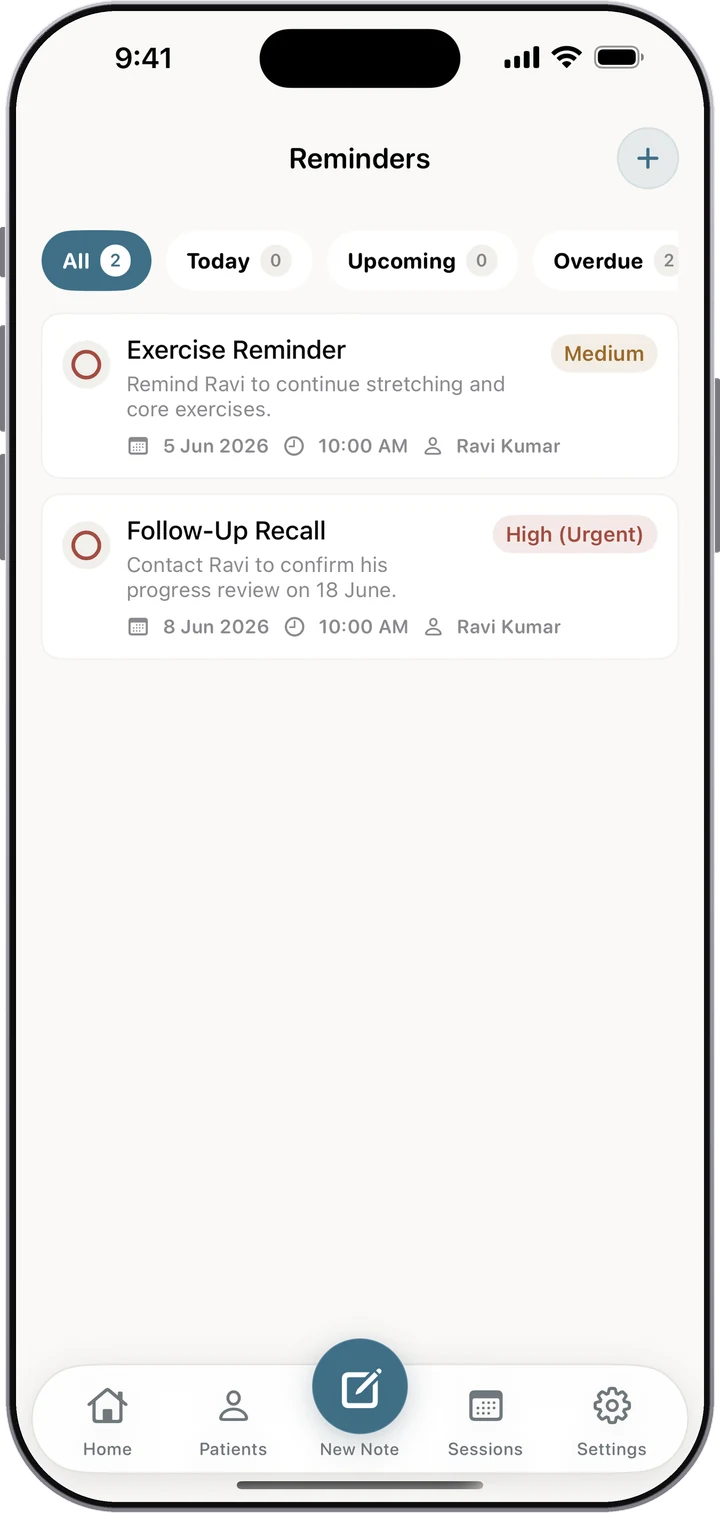
Instead of waiting for Ravi to remember on his own, the clinic created reminder tasks inside Dr. Notes.
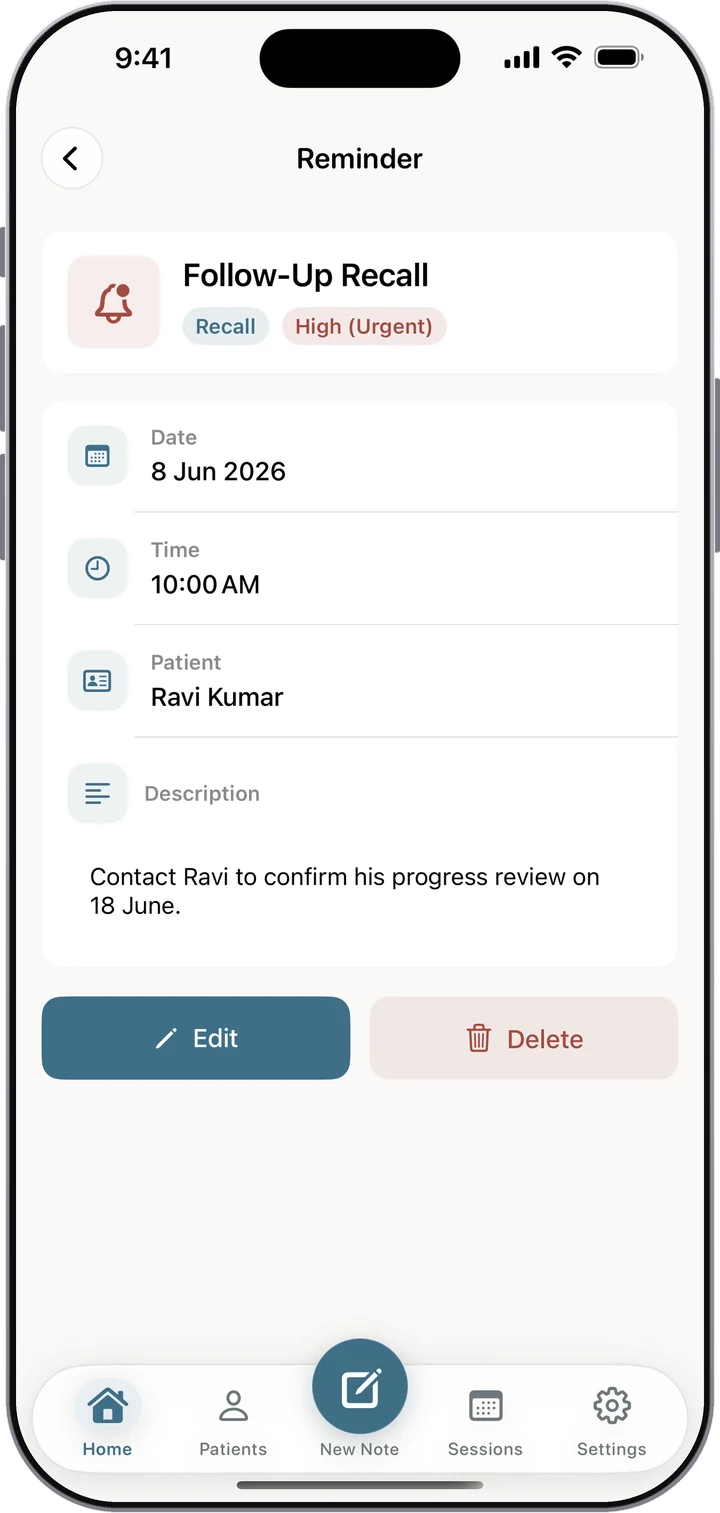
- Follow-Up Recall — Due Date: 8 June 2026 — Priority: Urgent
- Exercise Reminder — Due Date: 5 June 2026 — Priority: Medium
These reminders helped the clinic know exactly when to contact Ravi by WhatsApp, SMS, or a quick phone call.
Sometimes, a patient does not come back because they are careless. They simply forget.
A timely reminder brings them back into care before they disappear from the treatment journey.
Tracking Follow-Ups from One Dashboard
Dr. Notes gives the clinic a clear dashboard view of upcoming appointments and recalls.
Instead of opening multiple files, checking old notebooks, or searching through appointment books, Dr. Arun could see Ravi's follow-up in one place.
- Patient: Ravi Kumar
- Doctor: Dr. Arun MPT
- Due Date: 18 June 2026
- Time: 10:45 AM
- Purpose: Progress review after physiotherapy sessions
Everything was visible in one place, helping the clinic stay on top of patient care without depending on a receptionist.
When Ravi Returned
A few weeks later, Ravi arrived for his review appointment.
This time, Dr. Arun did not have to depend on memory or search through old papers. Every detail was already saved in Dr. Notes.
He could quickly see:
- What symptoms Ravi reported during the first visit
- What treatment was started
- Which exercises were prescribed
- When the follow-up was scheduled
- What progress needed to be checked
The appointment started exactly where the previous visit ended.
The patient felt remembered. The therapist felt prepared. And the clinic delivered better follow-up without needing a receptionist to manage every detail.
Why Recall Systems Matter
Many small clinics do not lose patients because of poor care. They lose them because there is no simple system to bring them back at the right time.
A follow-up may seem like a small thing, but for the patient, it can be an important part of recovery.
For the clinic, a structured recall system helps:
- Increase patient retention
- Improve treatment compliance
- Reduce missed follow-ups
- Improve patient outcomes
- Create predictable recurring revenue
- Build stronger long-term patient relationships
Because good care does not end when the first appointment is over. It continues when the patient comes back, gets reviewed, and moves forward in the right direction.
You Don't Need a Receptionist to Build a Recall System
A recall system is not always about hiring more staff.
It is about creating a simple process that works every day, even when the clinic is busy.
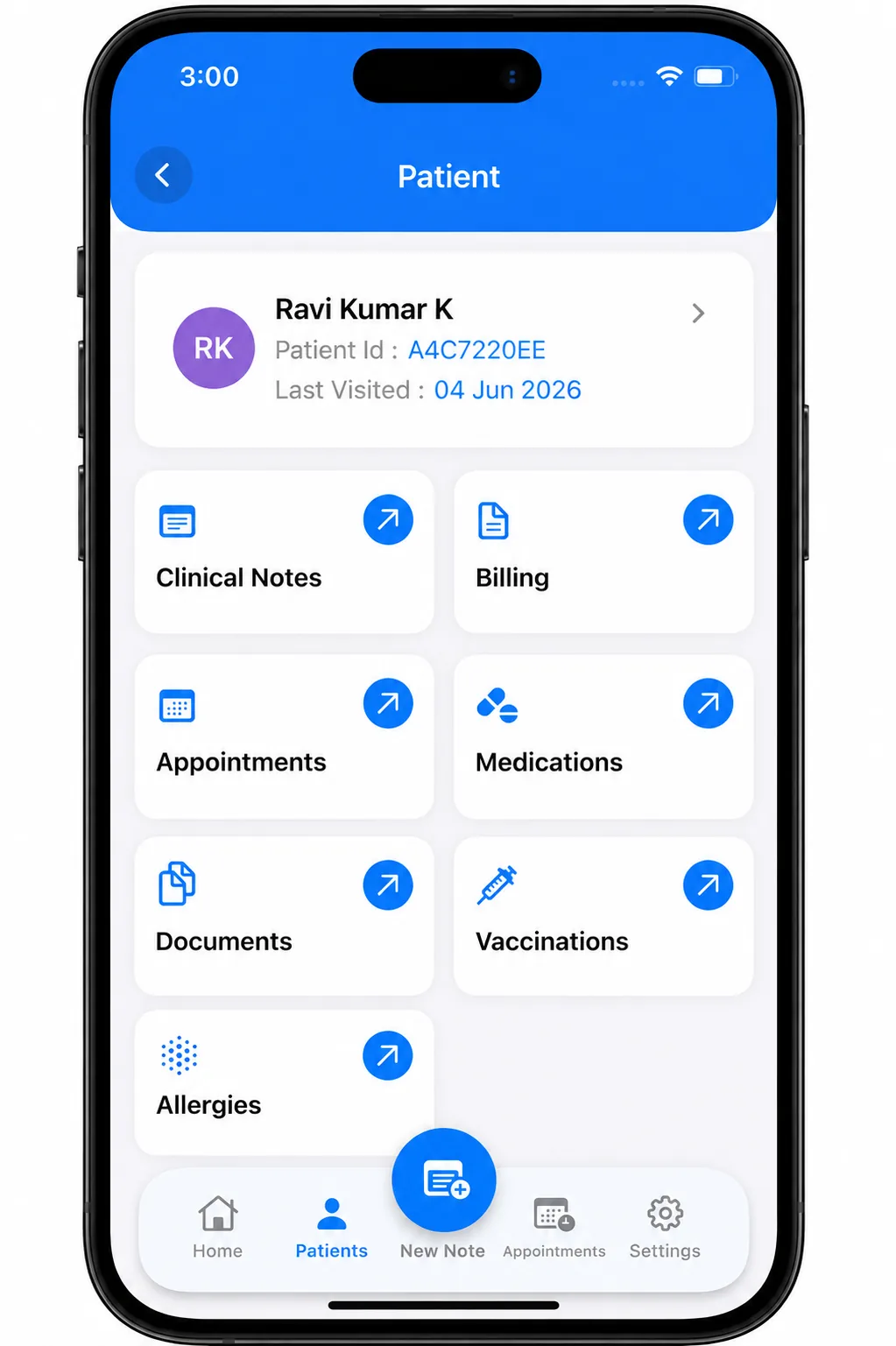
With Dr. Notes, clinics can manage the complete follow-up journey from one place.
- Create patient records
- Record clinical notes
- Schedule follow-up visits
- Track upcoming recalls
- Set reminders
- Monitor who returned and who missed appointments
Because the goal is not just to document patient visits.
The real goal is to make sure patients come back when they need care.
And sometimes, one simple reminder is enough to keep a patient's recovery journey moving forward.
Try Dr. Notes on Mobile
- Secure On-Device Data
- Instant Voice Notes
- Simple Patient Management
Comments
Have a question, or a way you handle this in your own practice? Share it below.