It's 7:45 pm. Dr. Anjali's last patient — a three-year-old with a croupy cough — just left with her mum. The waiting room is empty. Anjali pulls off her stethoscope and sits down. Her phone has nine unread WhatsApp messages from parents. Two are about a fever that spiked at 6 pm. One is a vaccination question that needs an answer before tomorrow morning. Six are "just one quick thing, doctor."
She still has notes to write for fifteen children seen today. The six-month immunisation booster lady's next visit goes in a spreadsheet she's been meaning to migrate for two years. Dinner is on the kitchen counter at home, cold. Her own child has been asleep for an hour.
From the outside, paediatrics looks joyful — smiling kids, bright clinics, doctors handing out stickers. Most paediatricians know what that picture leaves out.
A Video Many Paediatricians Quietly Agreed With
Recently Dr. Pankaj Tikku sat down with Nachiket Bhatia for an episode titled "Why You Should Not Choose Pediatrics? Earnings, Work Life Balance, Future." It's not a takedown of the specialty. It's an honest conversation about the parts of paediatric practice that don't appear in the brochure.
Watch the full conversation:
Why You Should Not Choose Pediatrics — The Nachiket Bhatia Show
The themes are familiar to anyone in the field: anxious parents, long hours, late-night calls, the emotional weight of treating a child who can't tell you where it hurts, and an income that doesn't always match the workload.
Children Don't Come Alone
A paediatrician isn't treating one patient. They're treating a child, a worried mother, and often a louder grandfather in the same room. A small fever can produce three different opinions before the doctor opens their mouth. The clinical part is honestly the easier half. The harder half is holding the room steady while you make a decision a parent will trust.
The Work Doesn't End at 7 pm
Paediatrics is not a 9-to-6 specialty. Parents call at 10:30 pm because the baby won't stop crying. They WhatsApp at 6 am about a rash. They knock on the clinic door on a Sunday because "the paediatrician knows our child." This isn't a complaint — it's the job. But it does mean the doctor's evening is rarely their own.
The Quiet Tax: Clinic Admin
Underneath the clinical work sits a second job: running the clinic. Appointment book. Vaccination reminders. Growth charts. Allergy lists. Prescription history. Billing. Follow-up tracking. Reconciling who's due for their MMR with who showed up last week.
Done on paper or across three apps, this eats hours. And it's exactly the part of the job that follows you home, because it doesn't fit between two patients in a busy OPD.
Where Dr. Notes Fits
Dr. Notes won't fix the emotional weight of paediatrics. Nothing will — and honestly, the bond with families is part of why most paediatricians chose this in the first place. But it does shrink the admin layer that follows you home.
Three things matter for a paediatric clinic:
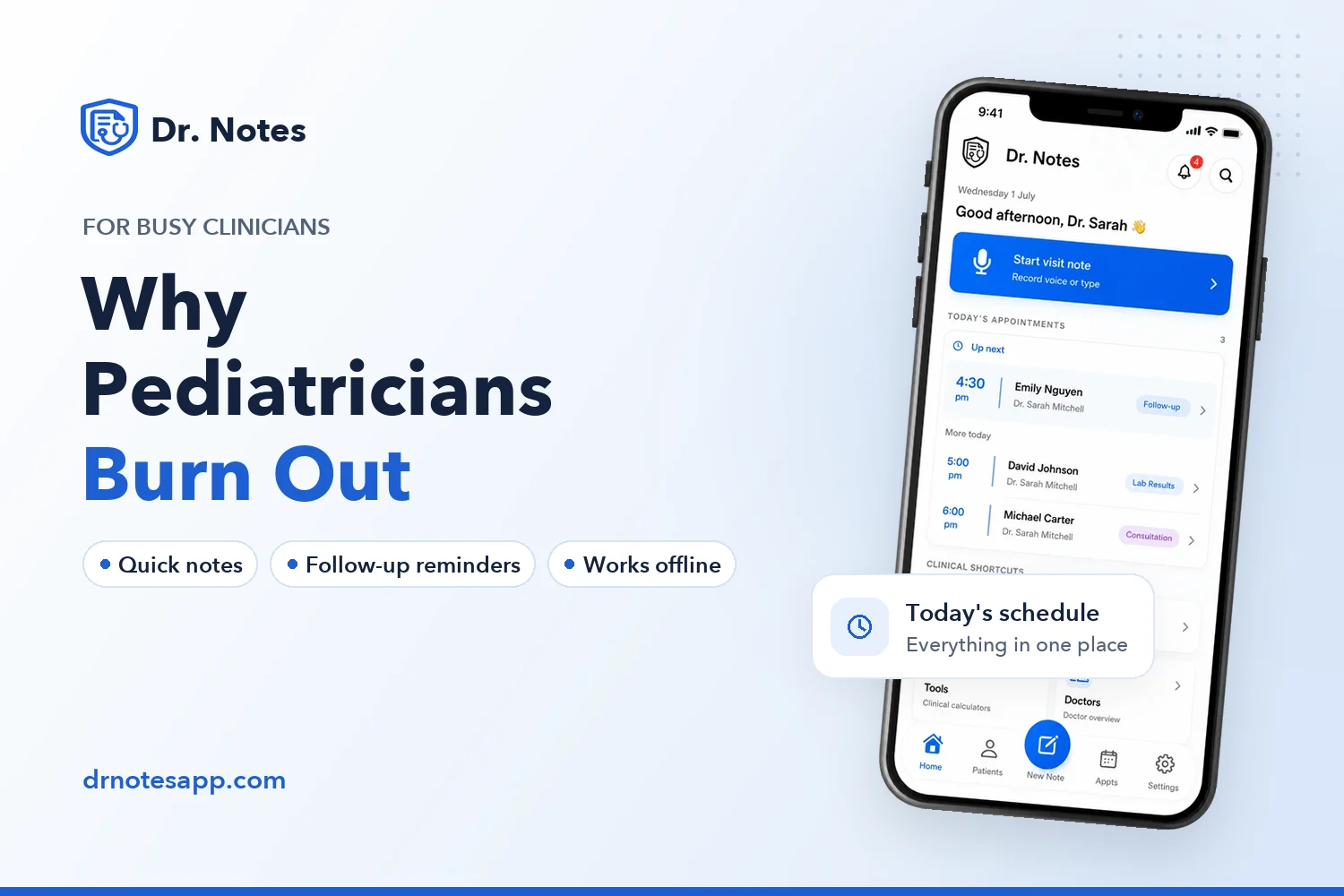
1. Voice notes during the visit. While Anjali is reassuring a parent, she can dictate the note in the language she's already using out loud — "two-year-old, fever three days, viral URI, paracetamol syrup, review if persists 48 hours." On-device voice-to-text means no waiting for the cloud. By the time she calls the next family in, the note is already written.
2. Patient history in one tap. Before each child walks in, the last three visits are right there — last fever, last antibiotic, last vaccine, growth trend, allergies. No scrolling through a paper file or a stale spreadsheet. The thirty seconds before the family sits down is enough to actually be ready for them.
3. Works offline. Home visits, the school health camp, the day the broadband drops at 4 pm — none of it stops the app. Patient data lives on the device. Nothing hangs on a sync. Nothing leaves the phone unless the doctor explicitly exports it.

Try Dr. Notes on Mobile
- Voice notes, on-device
- Patient history in one tap
- Works offline


A Realistic First Week
Nothing fixes years of clinic admin in one Monday. A practical first week with Dr. Notes for a paediatrician looks like this:
- Day 1. Pick five regular patients on tomorrow's list. Voice-note the visit while you're already explaining things to the parent.
- Day 2-3. Add growth notes, vaccine given, and the follow-up plan into the same voice note. Don't try to migrate everything yet.
- Day 4. Try it on a busy evening OPD. Notice how many fewer messages you carry home in your head.
- Day 5. Compare what time you left clinic this Friday versus last. For most paediatricians, this is the first week the notes haven't followed them home.
One Last Thing
Paediatricians don't burn out because they stopped loving children. They burn out because the work doesn't end when the family leaves — and one of the parts that follows them home is something a phone in their pocket can actually help with.
Dr. Tikku's reasons are bigger than any tool can solve. But the paediatricians who stay deserve a small win in the meantime: their evening back, dinner while it's warm, and time with their own kid before bed.
Dr. Notes is on the App Store and Google Play. Try it for a week of real clinic days and see what time you leave on Friday.
Comments
Have a question, or a way you handle this in your own practice? Share it below.