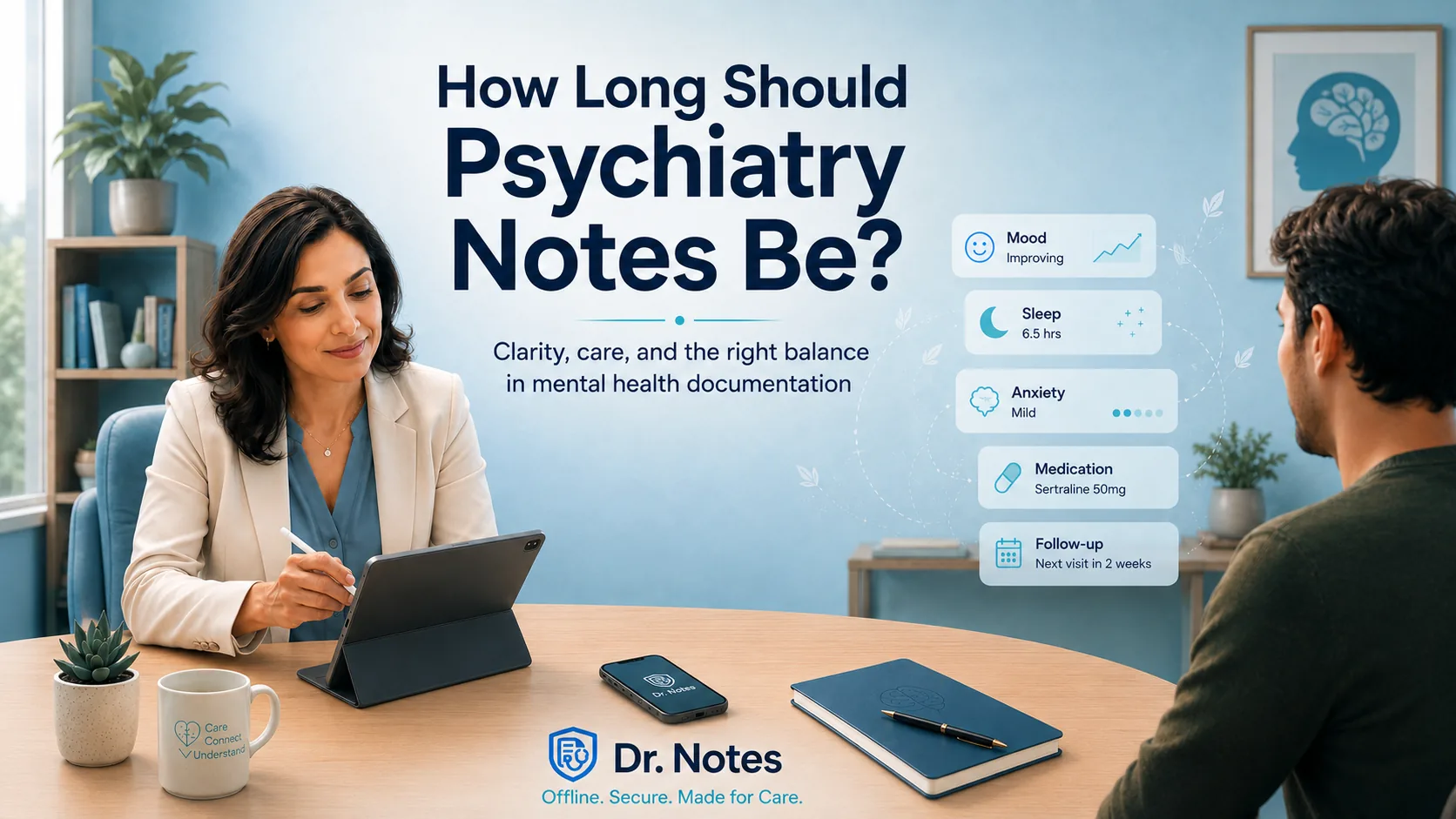
A patient walks into the consultation room after several sleepless nights.
They feel anxious, exhausted, and unable to stop overthinking. They may struggle to explain everything clearly, but their words carry something important—their fears, progress, setbacks, and sometimes their safety.
After the consultation, the psychiatrist has another important task: turning that conversation into a clear clinical note.
But how long should that note be?
Should it include every detail? Should it be brief? Or should it simply be clear enough to support the next step in the patient’s care?
The answer is simple: a psychiatry note should be long enough to support safe care, but short enough to review easily.
The Patient Story Behind Every Note
A psychiatry note is more than a clinical record.
It reflects the patient’s mood, sleep, anxiety, behaviour, treatment response, progress, and safety. It helps the doctor remember what happened during the visit and understand what needs attention next.
The aim is not to write down every word the patient says.
The aim is to capture what truly matters.
Choosing the Right Note Length
There is no fixed length that works for every psychiatry note.
A first consultation may require more detail because the psychiatrist needs to document the patient’s history, symptoms, mental state, risks, and treatment plan.
A routine follow-up may be shorter, especially when the patient is stable and there are no major changes.
The length should depend on the patient’s needs and the complexity of the visit.
- Initial consultation: Usually more detailed
- Routine follow-up: Usually shorter and focused on changes
- Complex or high-risk visit: Requires clearer supporting detail
- Stable review: Can be concise while still documenting the essentials
When a Note Has Too Much Detail
A very long note can be difficult to read.
Important information may become hidden within repeated or unnecessary details. This can make it harder for the doctor to quickly understand what has changed and what should happen next.
A good note should make the most important information easy to find.
When a Note Has Too Little Detail
A note that is too brief may leave out important information.
It may not clearly explain the patient’s symptoms, response to medication, side effects, progress, safety concerns, or treatment plan.
When these details are missing, continuing care can become more difficult.
What a Good Psychiatry Note Should Include
A clear psychiatry note should usually include the information needed to understand the patient’s current condition and continue care safely.
- Main concerns and current symptoms
- Progress since the previous visit
- Response to medication or therapy
- Medication side effects or adherence concerns
- Relevant mental-state findings
- Safety and risk assessment
- Clinical impression and treatment plan
- Follow-up instructions
It does not need to be unnecessarily long. It needs to help the doctor understand the patient, track changes, make safe decisions, and continue treatment with confidence.
Why Clear Notes Matter
The best psychiatry note is not always the longest one.
It is the note that clearly answers a few important questions:
- What is happening with the patient?
- What has changed?
- How is the treatment working?
- Are there any safety concerns?
- What is the next step?
When these points are easy to understand, the note becomes more useful for the doctor and for the patient’s ongoing care.

Try Dr. Notes on Mobile
- Secure On-Device Data
- Instant Voice Notes
- Simple Patient Management


How Dr. Notes Makes Psychiatry Notes Easier
Writing clear and organized clinical notes can take time, especially during a busy day.
Dr. Notes is designed to make this process simpler.
Doctors can create clinical notes using voice recording or text. They can also view patient profiles, review previous visits, manage appointments, set reminders, and record allergies and medications—all in one place.
- Create notes using voice or text
- Review previous consultations quickly
- Track medications and allergies
- Manage appointments and reminders
- Keep each patient’s clinical history organized
Private and Available Offline
One of the key benefits of Dr. Notes is that it works completely offline.
Patient information stays securely on the doctor’s device, remains private, and can be accessed without depending on an internet connection.
This helps doctors spend less time on documentation and more time listening to, understanding, and caring for their patients.
Watch Dr. Notes in Action
See how Dr. Notes helps doctors create and organize patient records and clinical notes from one simple mobile app.
Writing Psychiatry Notes That Matter
So, how long should a psychiatry note be?
It should be detailed enough to support safe and effective care, but simple enough to review quickly.
The goal is not to write more. The goal is to write what matters—clearly, carefully, and with the patient’s story at the centre.
Dr. Notes helps doctors create clear and organized psychiatry notes using voice recording or text. It also makes it easier to review previous visits, track patient information, and continue care with confidence.
With Dr. Notes, doctors can spend less time writing notes and more time caring for their patients.
Create Clearer Clinical Notes with Dr. Notes
- Voice and Text Clinical Notes
- Offline Patient Records
- Appointments and Reminders
Comments
Have a question, or a way you handle this in your own practice? Share it below.