
Every patient brings a story—not just a list of symptoms.
Two people may receive the same diagnosis but arrive at that point through very different experiences. One may be struggling after a major loss. Another may be affected by long-term work pressure, poor sleep, limited support or earlier trauma.
Their treatment needs may also be different.
A psychiatric formulation helps the psychiatrist connect these individual details. It brings symptoms, history, circumstances, risks and strengths together to create a meaningful explanation of the patient’s difficulties.
Most importantly, it helps turn the clinical conversation into a personalised care plan.
What Is a Psychiatric Formulation?
A psychiatric formulation is a concise clinical explanation of:
- What the patient is experiencing
- Why the difficulties may have developed
- Why they appeared or worsened at this time
- What may be keeping them going
- What could support recovery
- How this understanding should guide treatment
It brings together information from the psychiatric interview, relevant history, Mental Status Examination, risk assessment, clinical scales and other available sources.
A formulation is often described as a bridge between assessment and treatment. It creates an individual understanding of the patient, with diagnosis forming only one part of the complete clinical picture.
Diagnosis and Formulation: What Is the Difference?
A diagnosis identifies a recognised pattern of symptoms.
A formulation explains how those symptoms may have developed in this particular patient.
For example, two patients may both meet the clinical criteria for depression. However:
- One may have become unwell after bereavement.
- Another may have experienced ongoing workplace pressure.
- One may have strong family support.
- Another may be socially isolated.
- One may be sleeping well.
- Another may have severe insomnia.
- One may respond well to a previous treatment.
- Another may have experienced medication side effects.
The diagnosis may be similar, but the clinical understanding and care plan may need to be different.
A diagnosis asks:
What condition might explain these symptoms?
A formulation asks:
Why might this person be experiencing these difficulties at this time, and what could help?
Step 1: Begin With the Current Problem
Start with a short description of the patient’s present difficulties.
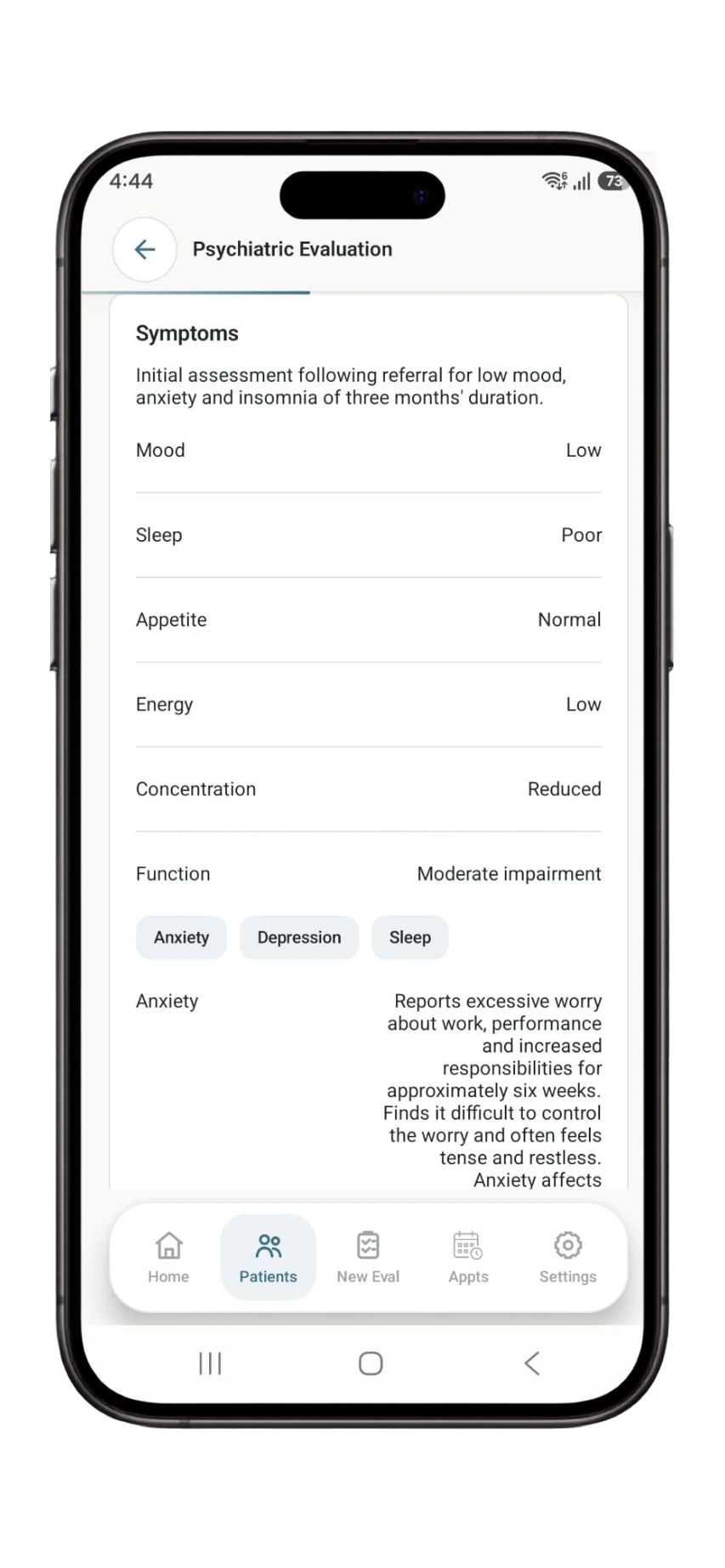
Include:
- Main symptoms
- Duration
- Pattern and severity
- Important recent changes
- Effect on daily functioning
- The patient’s understanding of the problem
- The patient’s main concerns and goals
Avoid simply listing symptoms.
Instead of writing:
Low mood, poor sleep and reduced concentration.
A more useful description would be:
The patient reports six weeks of persistent low mood, reduced interest, disturbed sleep, low energy and difficulty concentrating. These symptoms have affected work performance, social engagement and the ability to maintain a regular daily routine.
This gives the reader a clearer picture of both the symptoms and their effect on the patient’s life.
Step 2: Develop a Biopsychosocial Understanding
The biopsychosocial model considers biological, psychological and social influences together.
Biological Factors
These may include:
- Family history of mental illness
- Physical-health conditions
- Neurological or hormonal factors
- Sleep disturbance
- Pain or disability
- Current and previous medication
- Substance use
- Developmental or genetic vulnerability
Psychological Factors
These may include:
- Thoughts and beliefs
- Emotional responses
- Personality traits
- Coping patterns
- Self-esteem
- Trauma or loss
- Attachment experiences
- Avoidance
- Problem-solving ability
- Expectations of oneself and others
Social Factors
These may include:
- Relationships
- Family circumstances
- Employment or education
- Financial pressure
- Housing
- Social support
- Isolation
- Culture and identity
- Caregiving responsibilities
- Access to healthcare
- Legal or occupational difficulties
The purpose is not to create three unrelated lists. The psychiatrist should consider how these factors interact.
For example:
A family vulnerability to depression may combine with self-critical thinking, chronic sleep disturbance and increasing pressure at work. Social withdrawal may then reduce the support and positive activity available to the patient.
A comprehensive biopsychosocial formulation provides the foundation for understanding and managing psychiatric presentations.
Step 3: Organise the Formulation Using the Four Ps
The four Ps provide a practical structure for organising the clinical information:
- Predisposing factors
- Precipitating factors
- Perpetuating factors
- Protective factors
Predisposing Factors
Predisposing factors are long-term influences that may have increased the patient’s vulnerability.
The four-P framework organises factors that create vulnerability, trigger illness, maintain difficulties or support resilience.
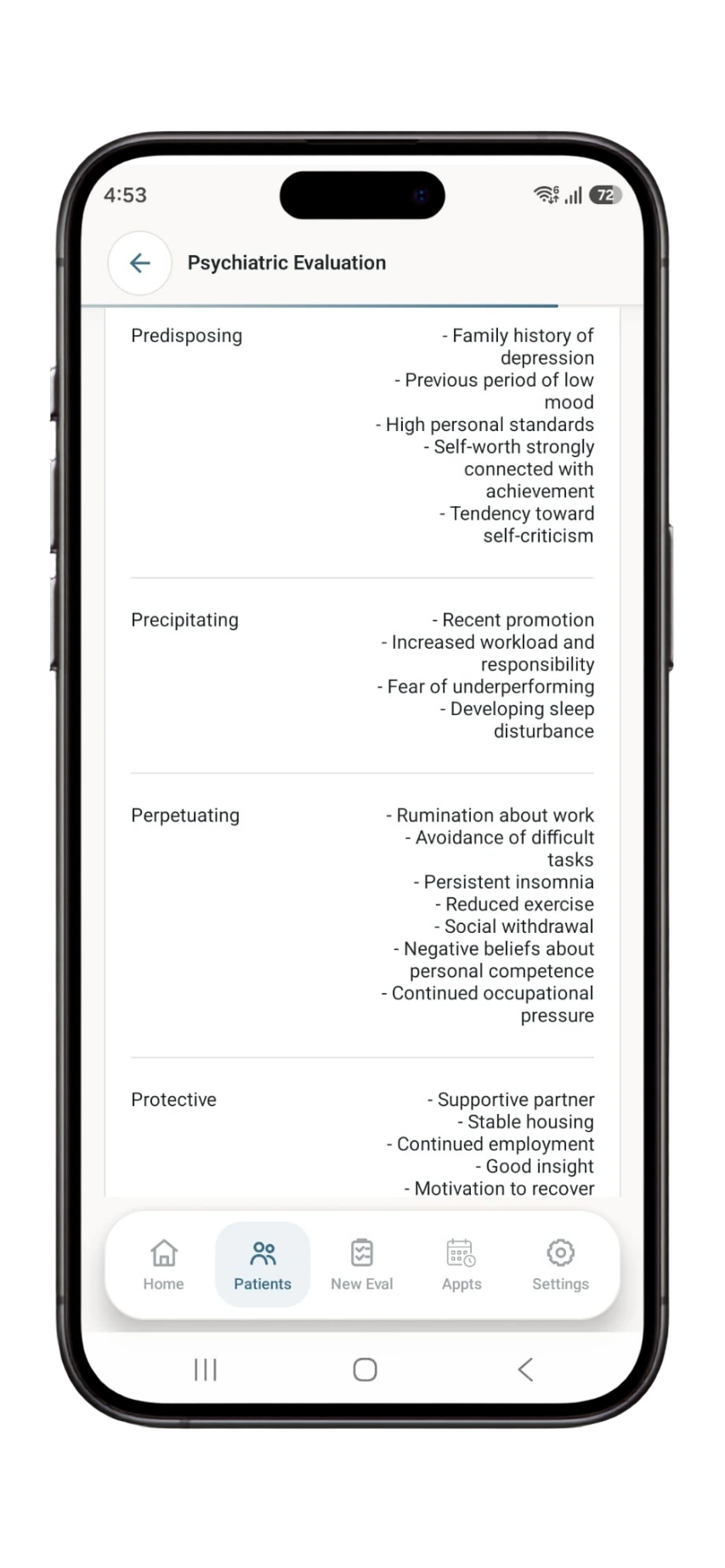
Examples include:
- Family history of mental illness
- Childhood adversity
- Earlier trauma
- Previous episodes of illness
- Chronic medical conditions
- Developmental difficulties
- Long-standing isolation
- High personal standards
- Self-critical thinking
- Limited coping skills
These factors do not mean the patient was certain to become unwell. They describe possible vulnerabilities.
Ask:
What may have made this patient more vulnerable?
Precipitating Factors
Precipitating factors are recent events or changes that may have triggered the current difficulties.
Examples include:
- Bereavement
- Relationship breakdown
- Workplace pressure
- Job loss
- Financial stress
- Physical illness
- Childbirth
- Academic pressure
- Medication changes
- Substance use
- Traumatic events
- Disrupted sleep
Ask:
Why did the difficulty begin or worsen at this particular time?
Perpetuating Factors
Perpetuating factors are patterns or circumstances that may be keeping the problem going.
Examples include:
- Avoidance
- Repeated worry
- Rumination
- Poor sleep
- Reduced activity
- Social withdrawal
- Continuing conflict
- Substance use
- Medication non-adherence
- Ongoing occupational pressure
- Negative beliefs
- Limited access to treatment
These factors are especially important because they often reveal practical treatment targets.
Ask:
What is preventing the problem from improving?
Protective Factors
Protective factors are the strengths, relationships and resources that may support safety and recovery.
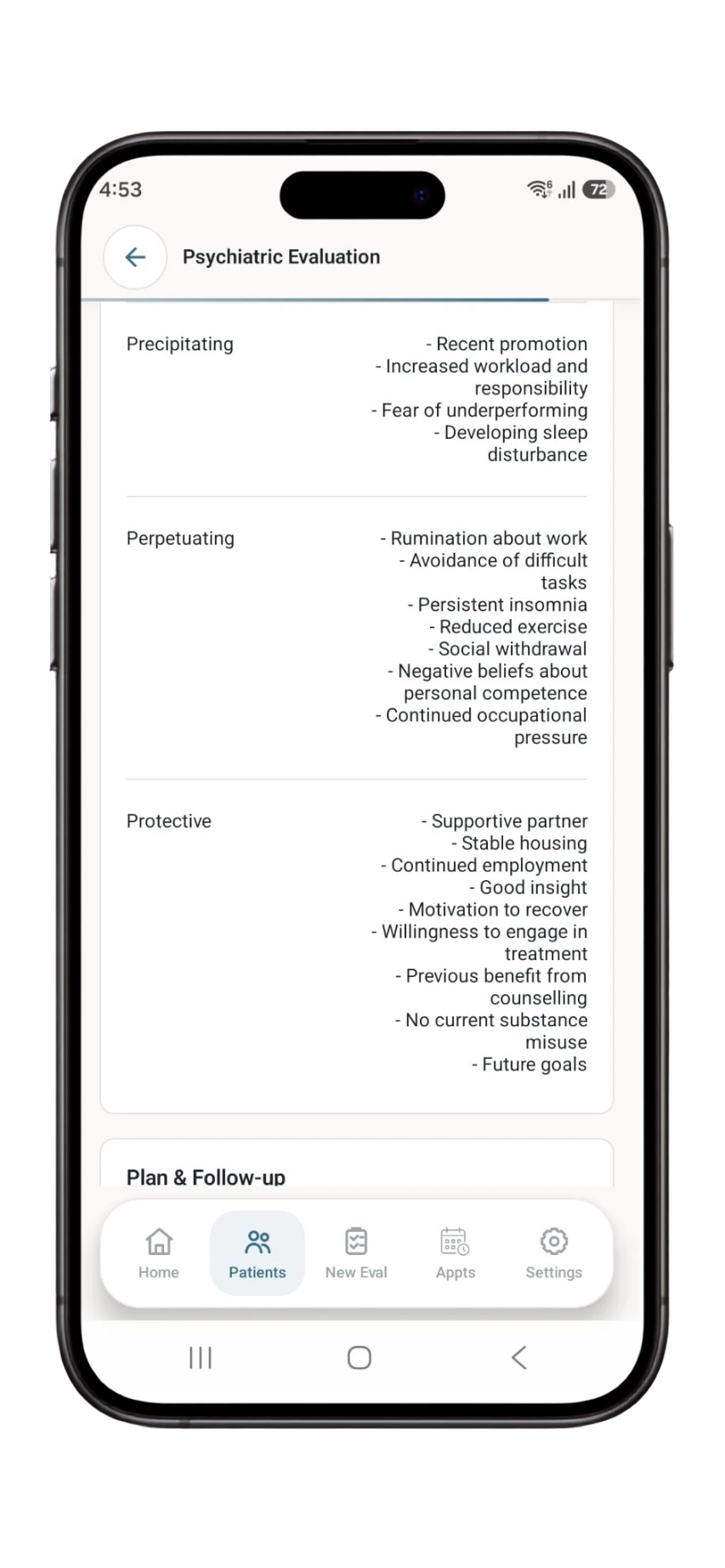
Examples include:
- Supportive family or friends
- Stable housing
- Employment or education
- Healthy coping skills
- Good insight
- Willingness to seek help
- Previous benefit from treatment
- Personal values
- Future goals
- Responsibility for loved ones
- Engagement with care
- Access to professional support
Ask:
What can help this patient remain safe and move towards recovery?
The four-P framework organises factors that create vulnerability, trigger illness, maintain difficulties or support resilience.
A Simple 4P Formulation Example
Consider a fictional adult presenting with low mood, anxiety, poor sleep and reduced functioning.
Predisposing Factors
- Family history of depression
- Previous period of low mood
- High personal standards
- Long-standing self-critical thinking
Precipitating Factors
- Recent promotion
- Increased responsibility at work
- Heavier workload
- Fear of underperforming
- Developing sleep disturbance
Perpetuating Factors
- Repeated worry about work
- Avoidance of difficult tasks
- Persistent insomnia
- Reduced exercise
- Social withdrawal
- Negative beliefs about personal ability
- Continuing occupational pressure
Protective Factors
- Supportive partner
- Stable housing
- Continued employment
- Good insight
- Motivation to recover
- Previous benefit from counselling
- Willingness to engage in treatment
- Future goals
These details can then be connected into a short narrative rather than left as separate lists.
Step 4: Include Safety and Risk
Safety should remain part of the complete formulation.
Depending on the presentation, the psychiatrist may assess:
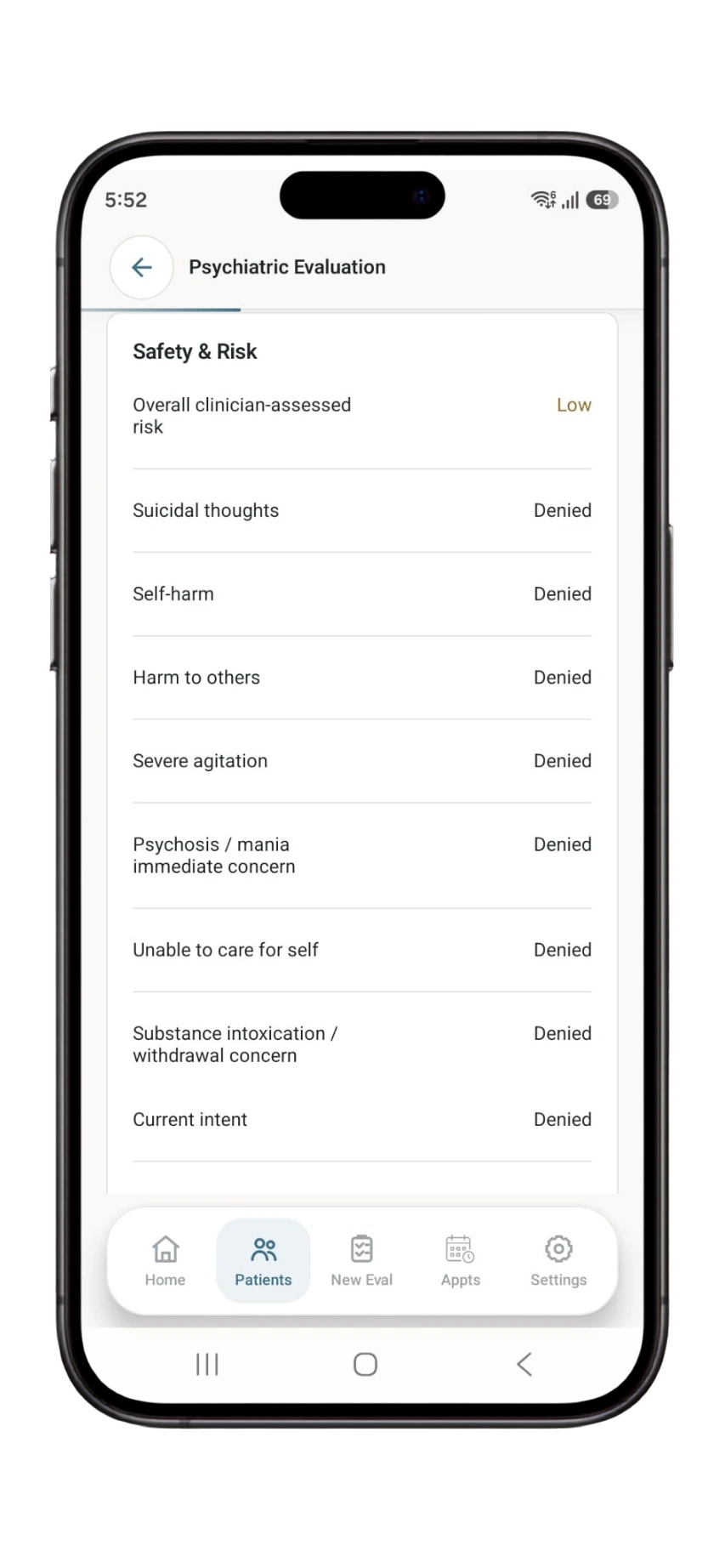
- Suicidal thoughts
- Self-harm
- Thoughts of harming others
- Intent
- Plans
- Access to means
- Previous attempts
- Severe agitation
- Psychosis or mania
- Substance intoxication or withdrawal
- Ability to care for oneself
- Protective factors
- Willingness to seek help
Avoid documenting only a risk label such as “low risk.”
Record the main findings supporting that judgement, along with any safety plan, emergency advice and follow-up arrangements.
Risk is dynamic. A risk formulation should consider how immediate and serious the concern is, what may increase it, what may reduce it and what management plan could help.
Step 5: Connect the Findings
The formulation should explain how the different factors may relate to one another.
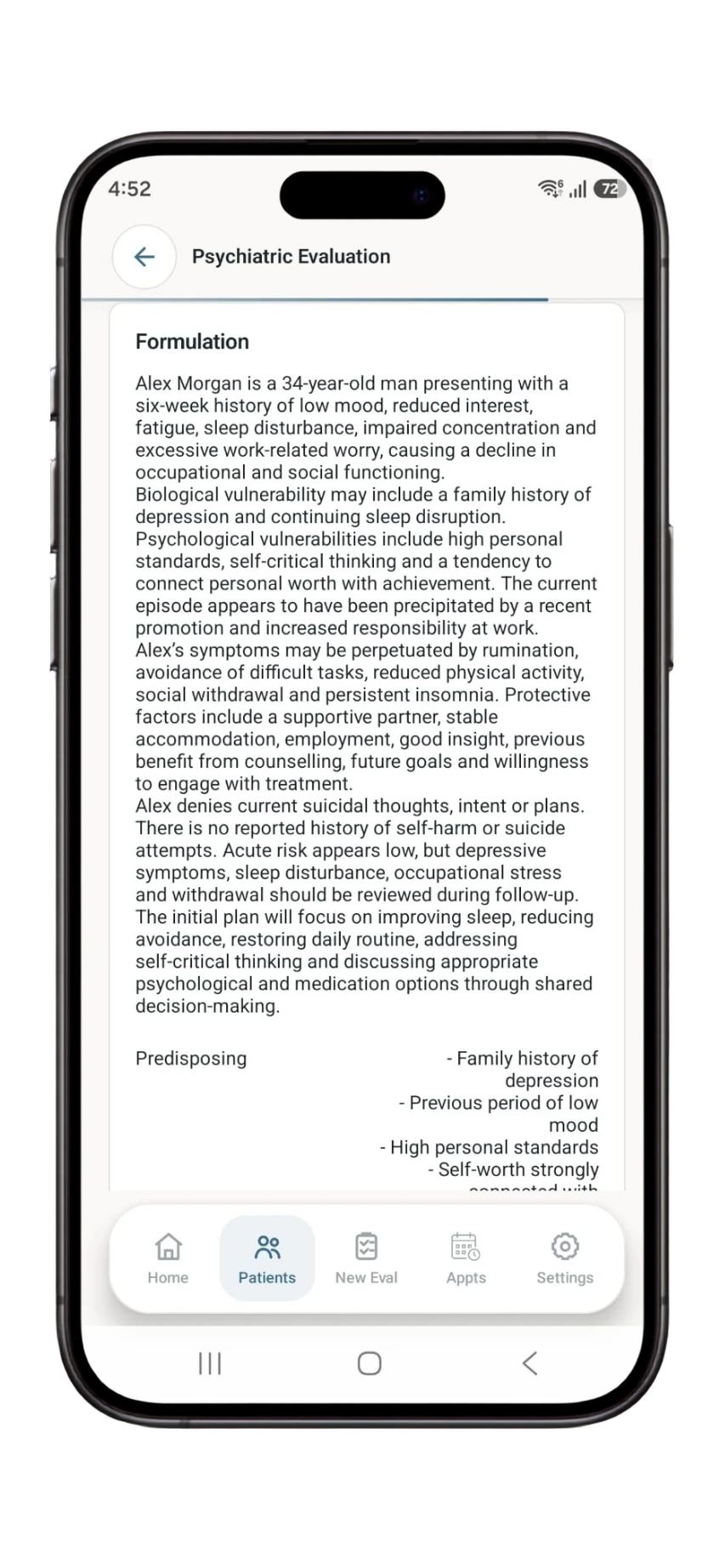
A practical structure is:
The patient presents with [current difficulties], affecting [areas of functioning]. Possible predisposing factors include [long-term vulnerabilities]. The current episode appears to have been precipitated by [recent triggers]. Symptoms may be perpetuated by [maintaining factors]. Protective factors include [strengths and support]. Safety findings indicate [current risk understanding]. The care plan will therefore focus on [treatment targets].
The goal is to create a clear clinical explanation—not an unnecessarily long life history.
Full Psychiatric Formulation Example
The patient presents with six weeks of low mood, reduced interest, tiredness, disturbed sleep, impaired concentration and excessive work-related worry. These symptoms have caused a decline in occupational and social functioning.
Possible biological vulnerabilities include a family history of depression and continuing sleep disturbance. Psychological vulnerabilities include high personal standards, self-critical thinking and a tendency to connect personal worth with achievement.
The current episode appears to have been precipitated by a recent promotion, increased responsibility and fear of underperforming at work.
The difficulties may be perpetuated by repeated worry, avoidance of challenging tasks, reduced physical activity, social withdrawal, persistent insomnia and negative beliefs about personal competence.
Protective factors include a supportive partner, stable housing, continued employment, good insight, previous benefit from counselling, future goals and willingness to engage in treatment.
The patient denies current suicidal thoughts, intent or plans, with no reported history of self-harm or suicide attempts. Immediate risk appears low, although mood, sleep, work pressure and social withdrawal should continue to be reviewed.
The initial care plan will focus on improving sleep, reducing avoidance, restoring daily structure and meaningful activity, addressing self-critical thinking and discussing appropriate psychological and medication options through shared decision-making.
Step 6: Record the Working Diagnosis
Once the formulation has connected the relevant information, the psychiatrist can document:
- The working diagnosis
- Differential diagnoses
- Medical explanations to consider
- Substance-related explanations
- Areas requiring further assessment
- Important uncertainty
A working diagnosis does not have to be permanent. It can be updated when new information becomes available or the patient’s presentation changes.
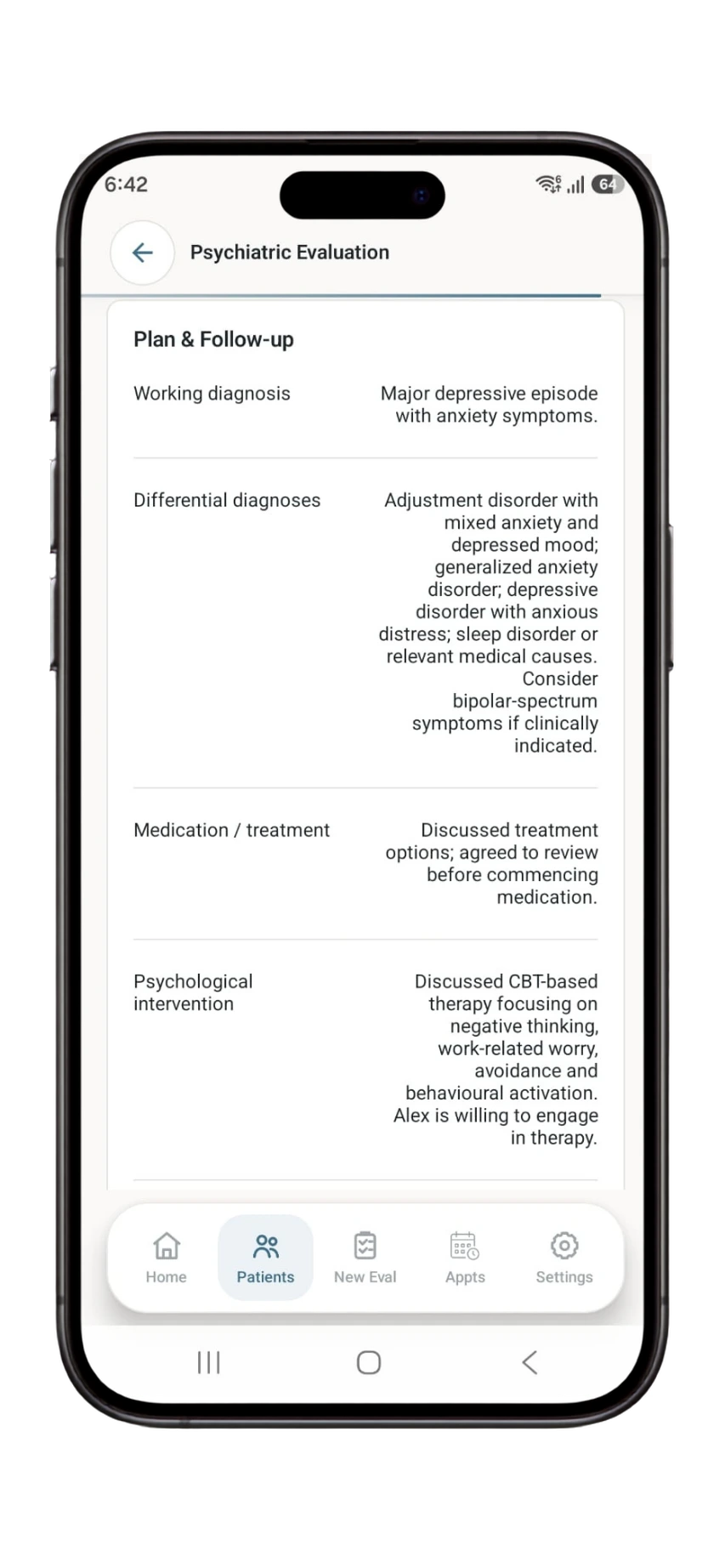
For the fictional example above, a psychiatrist might consider:
- A depressive episode with anxiety symptoms
- Adjustment disorder
- Generalised anxiety disorder
- Depression with anxious distress
- Sleep-related difficulties
- Relevant medical causes
- Bipolar-spectrum symptoms, if clinically indicated
The final diagnosis remains the responsibility of the treating psychiatrist.
Step 7: Turn the Formulation Into a Care Plan
A useful formulation should lead naturally to treatment.
| Formulation Finding | Possible Response |
|---|---|
| Poor sleep is worsening mood and concentration | Sleep assessment and practical sleep support |
| Avoidance is maintaining anxiety | Graded exposure or behavioural strategies |
| Reduced activity is worsening low mood | Behavioural activation |
| Work pressure triggered the episode | Workload review and occupational support |
| Negative self-beliefs maintain distress | Appropriate psychological intervention |
| Supportive relationships are available | Involve support with the patient’s consent |
| Safety concerns are present | Collaborative safety planning and closer follow-up |
The formulation explains why each part of the care plan may be relevant to this patient.
Psychological Intervention
Psychological treatment should address the factors identified in the formulation.
Depending on the patient’s needs, it may focus on:
- Negative thinking
- Repeated worry
- Avoidance
- Behavioural patterns
- Emotional regulation
- Trauma
- Relationship difficulties
- Problem-solving
- Coping skills
- Returning to meaningful activities
The therapeutic approach should be selected according to the patient’s presentation, preferences and clinical needs.
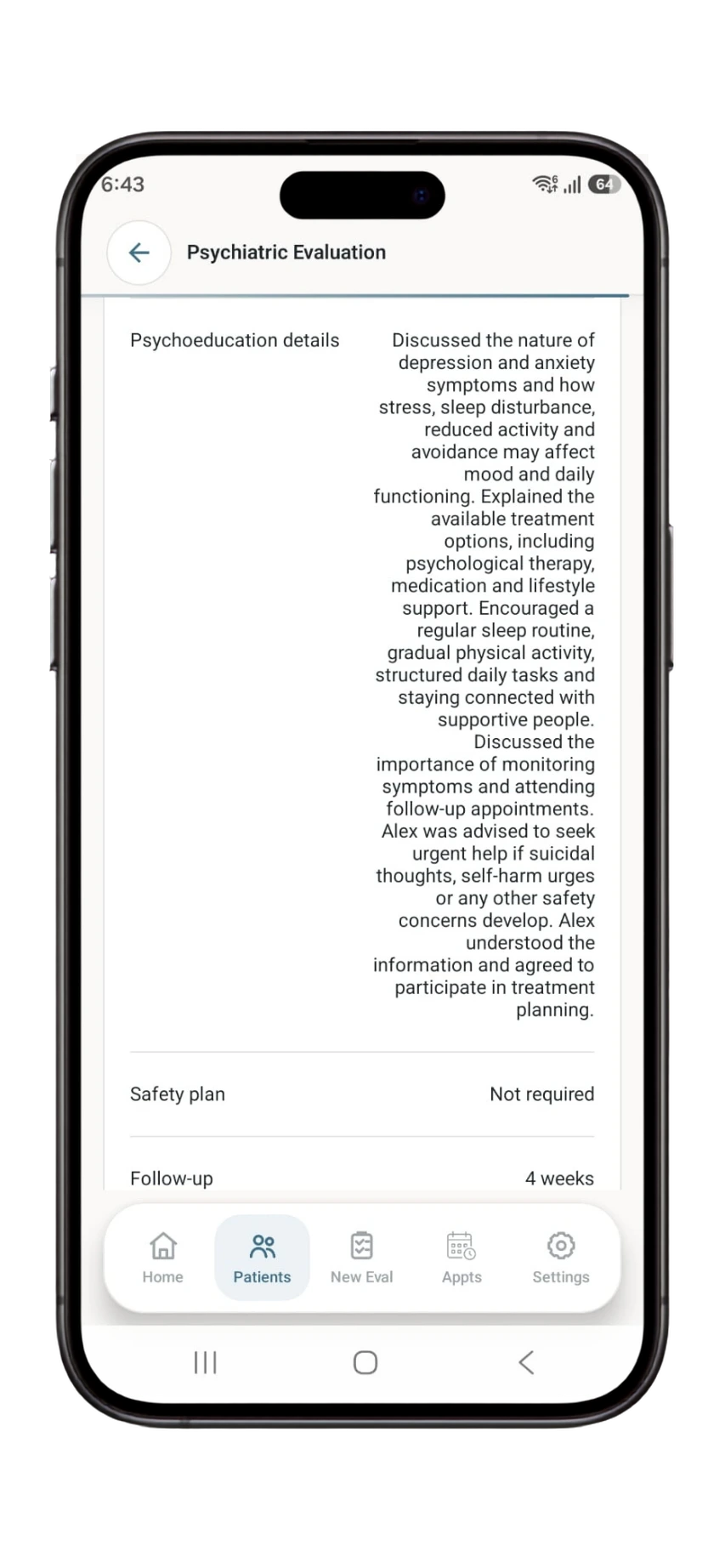
Psychoeducation
Psychoeducation helps the patient understand:
- Their symptoms
- How different factors may be connected
- Available treatment options
- Expected benefits and possible side effects
- Warning signs
- Practical coping strategies
- The purpose of follow-up
- When to seek urgent help
Use simple and respectful language.
When patients understand the formulation and care plan, they may feel more able to participate in decisions about their treatment.
Safety and Follow-Up
The final plan should clearly record:
- Whether a safety plan is required
- Warning signs to monitor
- Coping strategies
- Supportive contacts
- Emergency advice
- Follow-up timing
- What should be reviewed at the next visit
- When an earlier assessment is needed
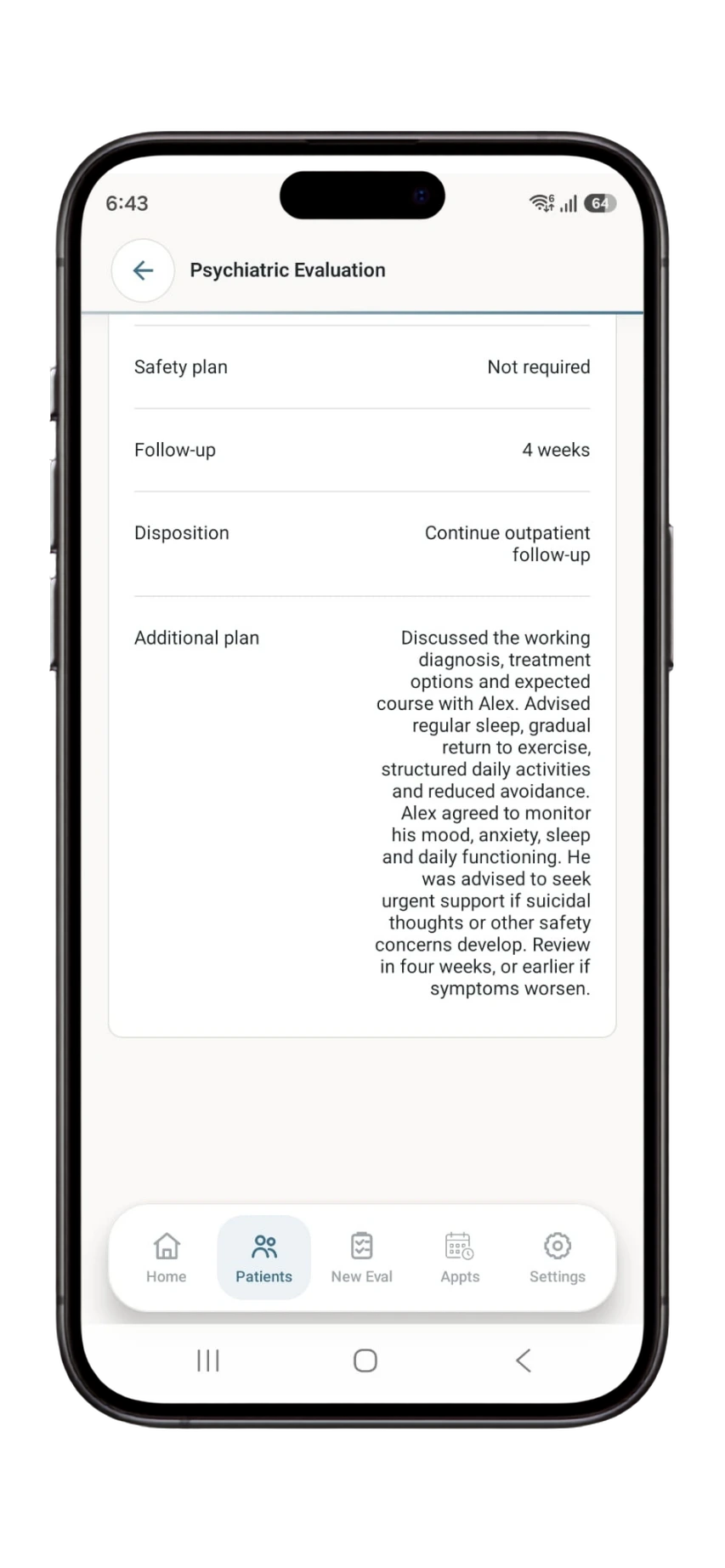
This creates a clear link between today’s assessment and the next consultation.
A Reusable Biopsychosocial Formulation Template
Presenting Problem
- Main symptoms:
- Duration:
- Severity:
- Effect on daily functioning:
- Patient’s understanding:
- Patient’s goals:
Biological Factors
- Family history:
- Medical conditions:
- Medication:
- Sleep:
- Substance use:
- Other relevant factors:
Psychological Factors
- Thoughts and beliefs:
- Coping patterns:
- Personality traits:
- Trauma or loss:
- Emotional responses:
- Other relevant factors:
Social Factors
- Relationships:
- Work or education:
- Housing:
- Finances:
- Social support:
- Culture and identity:
- Other relevant factors:
Four Ps
Predisposing factors:
What made the patient vulnerable?
Precipitating factors:
What recently triggered the problem?
Perpetuating factors:
What may be keeping it going?
Protective factors:
What may support safety and recovery?
Safety and Risk
- Current safety concerns:
- Intent or plans:
- Access to means:
- Previous behaviour:
- Protective factors:
- Current risk understanding:
- Safety response:
Clinical Conclusion
- Working diagnosis:
- Differential diagnoses:
- Areas requiring further assessment:
Care Plan
- Medication:
- Psychological intervention:
- Psychoeducation:
- Lifestyle support:
- Referrals or investigations:
- Safety plan:
- Follow-up:
Common Mistakes to Avoid
| Common Mistake | Better Approach |
|---|---|
| Repeating the patient’s history | Interpret the information and explain how the important details connect. |
| Listing factors without explaining them | Show how each factor may contribute to the current difficulties. |
| Focusing only on problems | Include strengths, support, personal goals and protective factors. |
| Treating the formulation as permanent | Review and update it when symptoms, risks or circumstances change. |
| Creating a plan unrelated to the formulation | Connect each treatment decision with an identified need, risk or maintaining factor. |
| Using language the patient cannot understand | Use clear, respectful language that can be discussed with the patient when appropriate. |
How Dr. Notes Supports Formulation and Care Planning
Dr. Notes for Psychiatrists brings the key elements of a psych evaluation into one connected workflow:
- Symptoms and daily functioning
- Psychiatric and relevant personal history
- Mental Status Examination
- Safety and risk assessment
- Clinical scales
- Biopsychosocial formulation
- Predisposing factors
- Precipitating factors
- Perpetuating factors
- Protective factors
- Working and differential diagnoses
- Treatment options
- Psychological intervention
- Psychoeducation
- Safety planning
- Follow-up
- Final review and PDF export
This helps the psychiatrist move clearly from understanding the patient’s story to documenting a meaningful and personalised care plan.
The app works offline, with patient information stored on the doctor’s device—helping keep clinical notes private and under the doctor’s control.
Dr. Notes supports structured documentation. It does not diagnose patients or replace professional clinical judgement.
Final Thoughts
A strong psychiatric formulation does more than describe a patient’s difficulties.
It connects the past with the present, explains what may be maintaining the problem, identifies strengths and turns clinical understanding into practical care.
A useful formulation should help the psychiatrist:
- Understand the complete person
- Connect symptoms with context
- Recognise risks and strengths
- Consider appropriate diagnoses
- Select personalised interventions
- Create clear next steps
- Review progress over time
The central message is simple:
Understand the story. Connect the factors. Build the plan.
Because when we understand the complete story, we can plan care that truly fits the person.
Comments
Have a question, or a way you handle this in your own practice? Share it below.