
A patient can appear calm, answer questions politely and still be carrying thoughts they have told no one else. When those thoughts emerge, the psychiatrist needs to listen carefully, ask direct questions and make room for the patient to speak without feeling judged.
The conversation also needs a clear record. What did the patient share? What did the psychiatrist learn about their safety? What decisions were made, and what support was arranged? Documenting these details helps the psychiatrist return to the next appointment with an understanding of what happened today.
Meet Alex
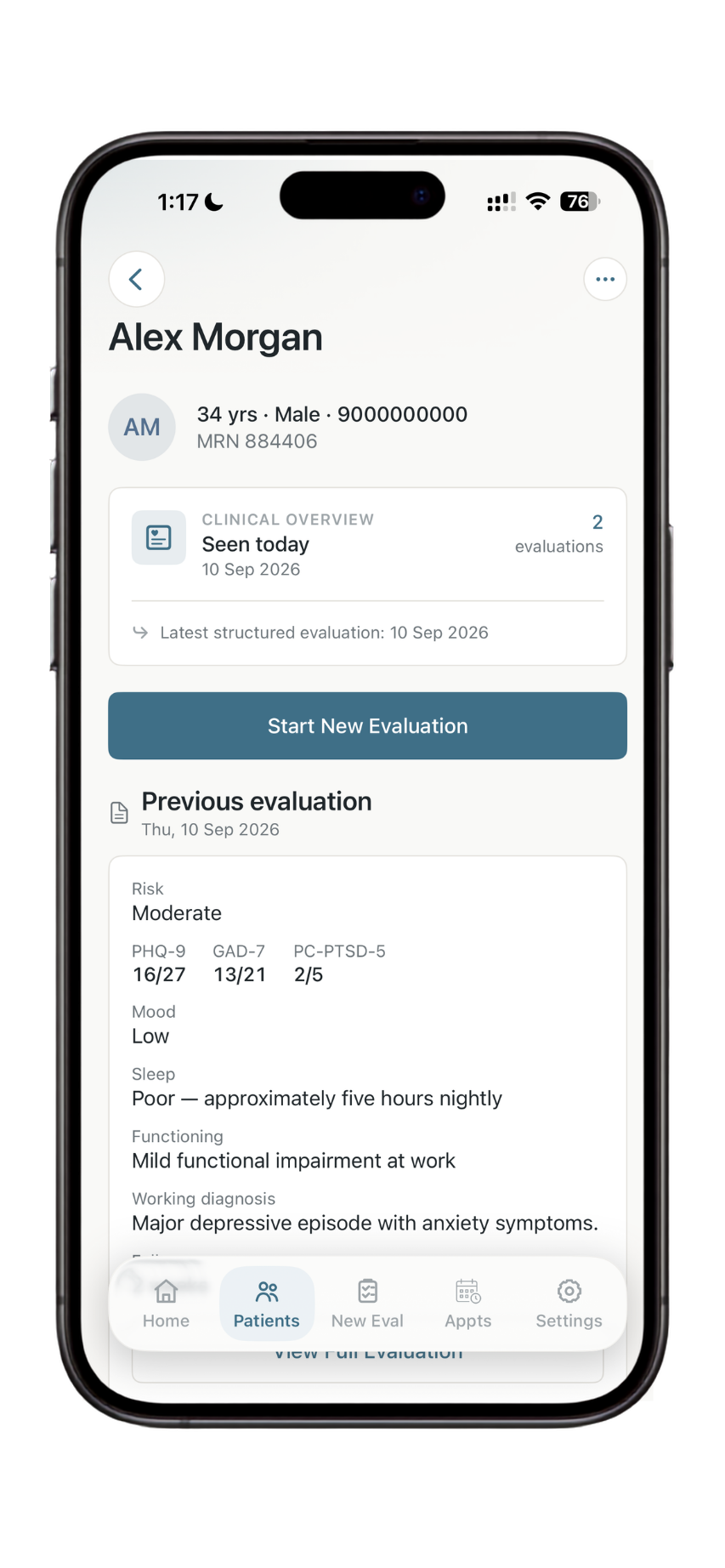
Alex Morgan is a 34-year-old teacher attending an outpatient follow-up appointment. He talks about pressure at work, poor sleep and the recent end of a relationship. His answers are brief, and he avoids eye contact.
Then he pauses and says:
“Sometimes I feel that everyone would be better without me.”
His psychiatrist gives him time to speak. She acknowledges what he has said and asks calm, direct questions to understand what he is experiencing and assess his safety.
Alex’s words prompt a fuller assessment. The psychiatrist explores when the thoughts occur and how often, whether he has any intention or plan to end his life, whether he has access to means, and what has helped him stay safe so far. She also considers his symptoms, recent stresses, previous behaviour and the people he can turn to for support.
Step 1: Record why the assessment was completed
Begin by documenting what prompted the suicide risk assessment.
In Alex’s case, the reasons include:
- A statement suggesting a passive wish to die
- Worsening depressive symptoms
- Hopelessness
- Relationship separation
- Work-related stress
- Poor sleep and increasing social withdrawal
The documentation might read:
“A suicide risk assessment was completed after the patient reported passive thoughts that others might be better without him, together with worsening depression and hopelessness.”
This provides context. It shows that the assessment was connected to information obtained during the consultation rather than being an isolated checklist.
Step 2: Describe the suicidal thoughts clearly
Terms such as “suicidal,” “positive” or “high risk” are not detailed enough on their own.
Document:
- Whether the thoughts are passive or active
- When they began
- How often they occur
- How long they last
- When they occurred most recently
- Whether their frequency or intensity has changed
- What was happening when the thoughts appeared
- How controllable the patient feels they are
- What stops the patient from acting on them
Alex explains that the thoughts began approximately two weeks ago. They usually appear late at night when he feels alone. They occur several times each week and last for a few minutes.
He describes them as thoughts of not wanting to wake up, rather than an intention to end his life.
A clear note could say:
“The patient reports passive thoughts of death several times per week for approximately two weeks, usually when alone at night. He denies current active suicidal thoughts and describes no intention to act on these thoughts.”
Direct, neutral language makes the record easier for another clinician to understand.
Step 3: Assess current intent
Intent and thoughts are related, but they are not the same.
The psychiatrist asks Alex whether he currently intends to end his life. She also explores whether he expects that he may act on the thoughts in the near future.
Document whether intent is:
- Present
- Denied
- Unclear
- Fluctuating
- Unable to be reliably assessed
Alex denies current intent. He says the thoughts frighten him and that he wants help.
The record might state:
“The patient denies current suicidal intent and denies expecting to act on the thoughts. He is seeking support and agrees to participate in safety planning.”
Avoid documenting “no risk” simply because the patient denies intent. The final judgement should consider the complete clinical picture.
Step 4: Ask about a plan and access to means
The assessment should directly explore whether the patient has considered a method, formed a specific plan, taken preparatory steps or has access to potentially lethal means.
NIMH guidance recommends asking about a suicide plan and access to means even when other responses appear reassuring.
Document:
- Whether a specific plan exists
- How detailed or developed it is
- Whether preparatory behaviour has occurred
- Whether relevant means are accessible
- Whether access has recently changed
- What safety actions were discussed or completed
Alex denies having a method or plan. He reports no preparatory behaviour and no identified access to means connected with suicide.
The note could say:
“The patient denies a specific suicide plan, preparatory behaviour or identified access to means. Lethal-means safety was discussed as part of the risk-management plan.”
Do not document unnecessary operational details. Include only the clinically relevant information needed to support assessment and care.
Step 5: Document previous attempts and self-harm separately
A previous suicide attempt and non-suicidal self-injury are not interchangeable.
Ask about:
- Previous suicide attempts
- Approximate dates and circumstances
- The patient’s intent at the time
- Medical consequences
- Treatment received
- Interrupted or aborted attempts
- Preparatory behaviour
- Non-suicidal self-injury
- Recent changes in self-harm behaviour
Alex reports no previous suicide attempts. He describes one episode of superficial self-injury at age 19 but says he did not intend to die.
The psychiatrist documents:
“No previous suicide attempts reported. The patient describes one episode of superficial self-injury at age 19 without suicidal intent. No recent self-harm.”
Past suicidal behaviour is a particularly important risk factor and should not be reduced to a simple yes-or-no entry without relevant context.
Step 6: Record current risk factors
Risk does not come from a single symptom or score. It is formed by the interaction of current circumstances, psychiatric symptoms, history and access to support.
For Alex, the psychiatrist records:
- Worsening depressive symptoms
- Hopelessness
- Recent relationship loss
- Occupational stress
- Poor sleep
- Increasing isolation
- Passive thoughts of death
- A remote history of non-suicidal self-injury
Other relevant areas may include:
- Previous suicide attempts
- Substance use or intoxication
- Agitation or impulsivity
- Psychosis
- Mania
- Severe anxiety
- Chronic pain or serious illness
- Financial or legal problems
- Recent discharge from inpatient care
- Family history of suicide
- Sudden loss of support
- Treatment disengagement
Document only what was assessed and clinically relevant to the individual patient.
Step 7: Give protective factors equal attention
Protective factors are not decorative additions to the note. They help explain the patient’s current situation and inform the safety plan.
Alex identifies:
- A close relationship with his daughter
- Support from his sister
- Stable housing
- Continued employment
- Willingness to receive treatment
- Future plans
- A desire to recover
- Ability to seek help
The note might say:
“Protective factors include a close relationship with his daughter, regular contact with his sister, stable housing, employment, future orientation and active engagement with treatment.”
Protective factors do not automatically cancel risk factors. Their strength, reliability and availability should be considered in context.
Step 8: Include the relevant Mental Status Examination
The Mental Status Examination should support the clinical formulation rather than sit separately as unrelated information.
For Alex, the psychiatrist records:
- Appearance: appropriately dressed and well groomed
- Behaviour: calm and cooperative
- Eye contact: reduced when discussing suicidal thoughts
- Speech: quiet but clear
- Mood: “very low”
- Affect: constricted but reactive
- Thought process: linear and goal-directed
- Thought content: passive thoughts of death; no current intent or plan
- Perception: no hallucinations reported
- Cognition: alert and oriented
- Insight: good
- Judgement: intact during the assessment
Document abnormalities and relevant normal findings. Avoid vague statements such as “MSE normal” when individual findings influenced the risk decision.
Step 9: Write a clinical risk formulation
A risk formulation should explain the psychiatrist’s reasoning.
It should connect:
- Current suicidal thoughts
- Intent and planning
- Previous behaviour
- Acute and longer-term risk factors
- Protective factors
- Mental state
- Reliability of the information
- Available support
- Likely changes that could increase risk
For Alex, the formulation could read:
“Alex presents with worsening depressive symptoms, hopelessness and passive thoughts of death in the context of relationship separation and occupational stress. He denies current intent, a specific plan, preparatory behaviour and access to identified means. He has no history of suicide attempts but reports remote non-suicidal self-injury. Protective factors include his daughter, supportive sister, stable housing, employment, future plans and willingness to engage in care. His current clinician-assessed risk is moderate and requires an updated safety plan, closer monitoring and prompt follow-up.”
A label such as “low,” “moderate” or “high” should never stand alone. The record should show why that judgement was reached.
The Joint Commission calls for documentation of the patient’s overall suicide risk level and the plan used to reduce that risk.
Step 10: Create a collaborative safety plan
A safety plan is more than telling the patient to seek help if things become worse.
It should be practical, personalised and developed with the patient. VA guidance describes safety planning as a collaborative, patient-centred intervention containing clear steps a person can use during increasing distress or a suicidal crisis.
A safety plan commonly includes:
- Personal warning signs
- Internal coping strategies
- People or places that provide distraction
- Trusted people the patient can contact
- Professional and crisis-support contacts
- Steps to reduce access to lethal means
Alex identifies his warning signs as lying awake, withdrawing from his sister, missing work and feeling that he is a burden.
His coping steps include taking a walk, listening to familiar music and moving into a shared space rather than remaining alone.
He agrees to contact his sister if the thoughts become stronger. The psychiatrist confirms the appropriate professional and emergency contacts and discusses reducing access to potentially dangerous items.
The record should state what was actually agreed:
“A collaborative safety plan was reviewed and updated. The patient identified warning signs, coping strategies and his sister as a primary support. Crisis and emergency options were discussed. Lethal-means safety was reviewed. The patient received a copy of the plan and was able to explain how he would use it.”
Safety planning should not be treated as a guarantee of safety or a replacement for appropriate clinical intervention.
Step 11: Document the disposition and immediate plan
The record should clearly show what happens after the assessment.
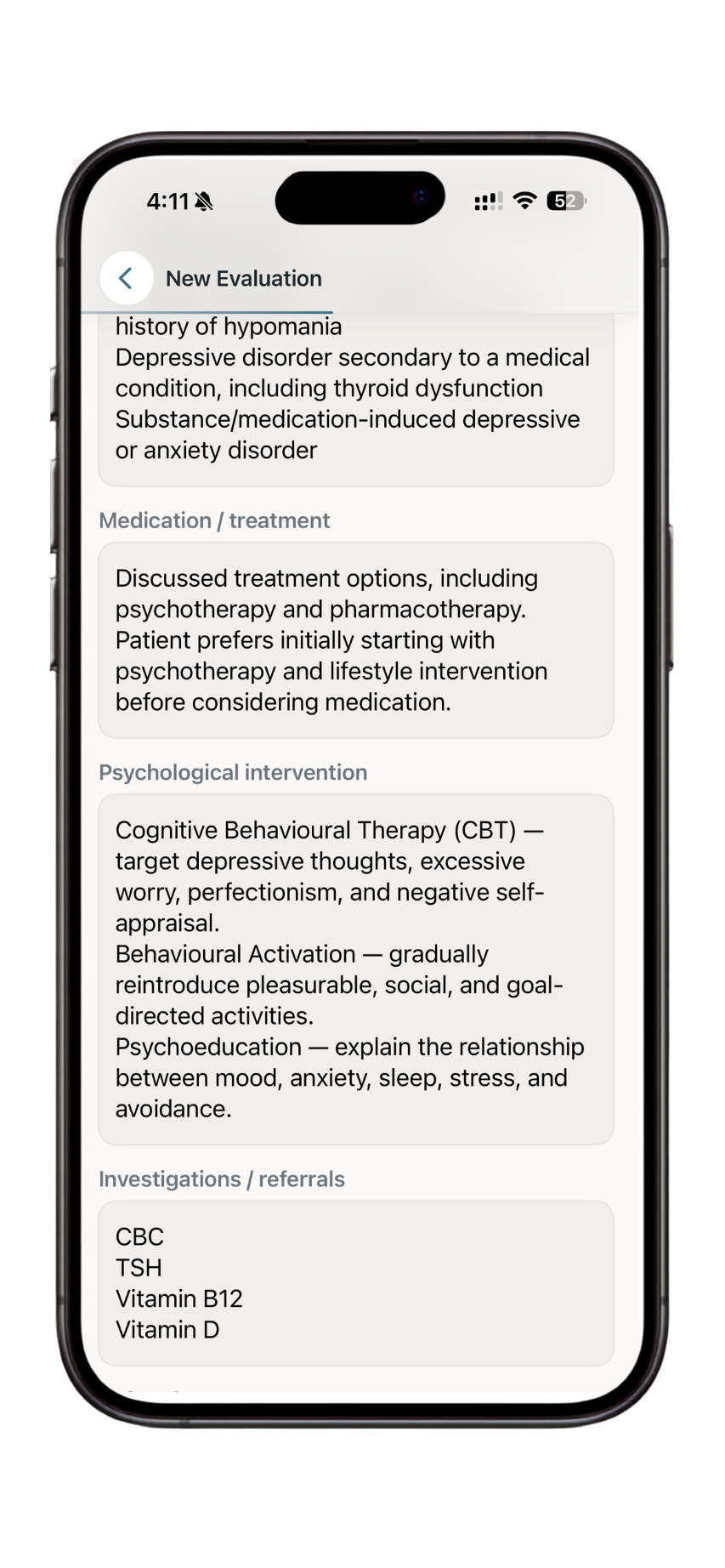
Possible actions may include:
- Emergency evaluation
- Transfer to a higher level of care
- Consultation with another clinician
- Involvement of a support person, where appropriate
- Medication review
- Increased appointment frequency
- A telephone check-in
- Referral for therapy or another service
- Updated safety planning
- Crisis information
- Specific instructions for worsening symptoms
Alex does not currently report intent, a plan or preparatory behaviour. He is engaged, help-seeking and has accessible support. Based on the complete assessment, the psychiatrist decides to continue outpatient care with closer monitoring.
The plan is documented as:
“Continue outpatient management with increased monitoring. Safety plan updated. Medication response and adherence reviewed. Telephone check-in arranged for the following day, with an in-person appointment in three days. The patient was advised to use emergency services immediately if suicidal intent develops, a plan emerges or he is unable to maintain his safety.”
If the patient is at immediate risk, outpatient documentation should never delay urgent intervention.
Step 12: Make the follow-up specific
“Follow up soon” is not a complete plan.
Document:
- The date or time frame
- The type of contact
- Who is responsible
- What will be reassessed
- What the patient should do if their condition worsens
- Whether support people or other clinicians were contacted
- Any barriers to follow-up
For Alex:
“Telephone review tomorrow to reassess suicidal thoughts, intent, sleep and use of the safety plan. In-person follow-up scheduled in three days. The patient agrees to contact the clinic earlier or use emergency services if risk increases.”
Specific follow-up creates continuity and allows the next clinician to understand exactly what was planned.
Suicide Risk Assessment Documentation Checklist
Before completing the note, confirm that the following areas are addressed:
Reason for assessment
- Trigger for the assessment
- Patient’s own words where clinically helpful
- Changes from the previous visit
Suicidal ideation
- Passive or active thoughts
- Frequency, duration and most recent occurrence
- Intensity and controllability
- Current thoughts
Intent, plan and means
- Current intent
- Specific plan
- Preparatory behaviour
- Access to means
- Lethal-means safety discussion
History
- Previous suicide attempts
- Interrupted or aborted attempts
- Non-suicidal self-injury
- Relevant treatment following previous events
Clinical context
- Psychiatric symptoms
- Substance use
- Recent stressors or losses
- Relevant medical concerns
- Mental Status Examination
- Reliability of information
Risk and protection
- Acute and longer-term risk factors
- Protective factors
- Support network
- Reasons for living and future orientation
Clinical judgement
- Overall risk formulation
- Rationale for the assessed level of risk
- Factors that could increase or reduce risk
- Reason for the chosen disposition
Safety and follow-up
- Collaborative safety plan
- Crisis and emergency instructions
- Involvement of supports, when appropriate
- Treatment changes
- Follow-up date and method
- Reassessment plan
How Dr. Notes for Psychiatrists can support the process
A suicide risk assessment requires careful listening. Documentation should support that conversation rather than pull the psychiatrist away from it.
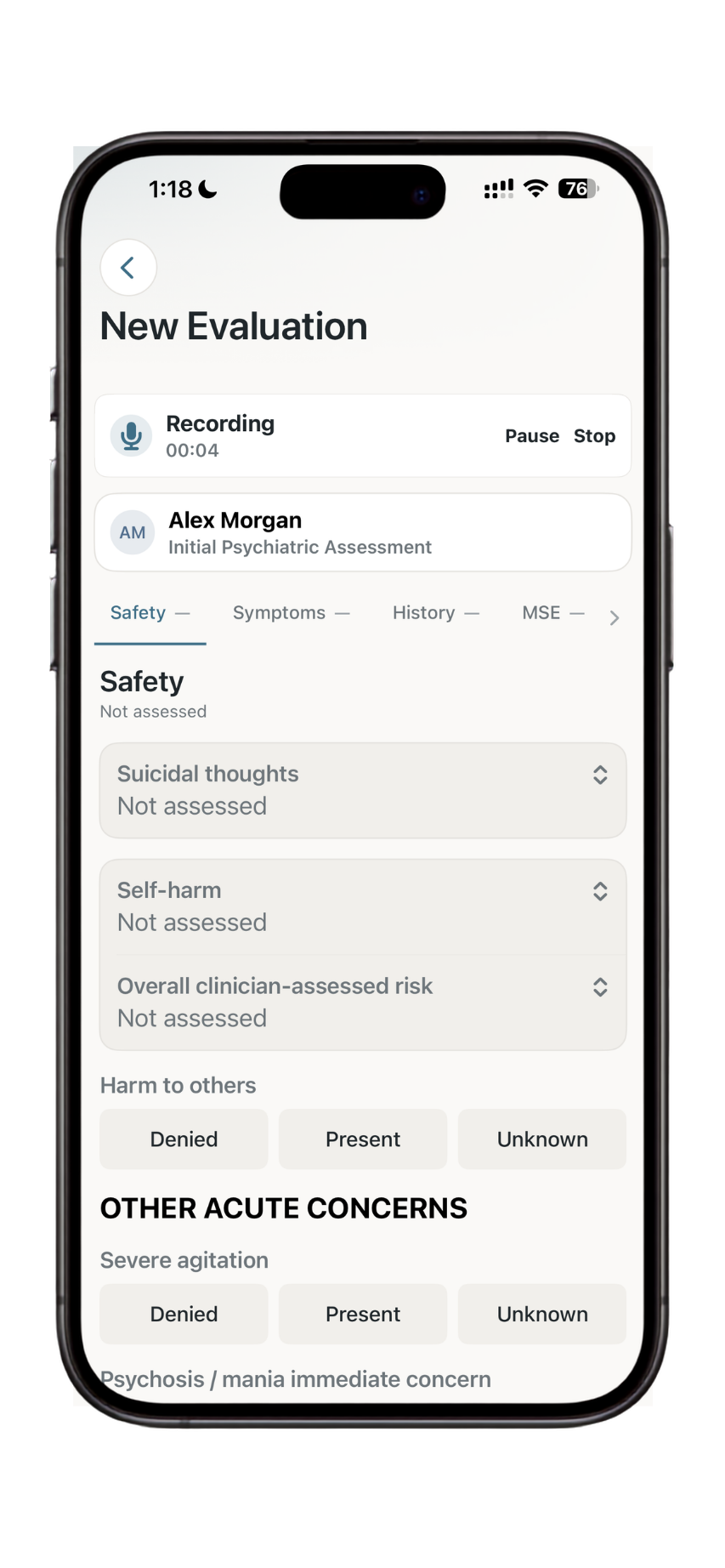
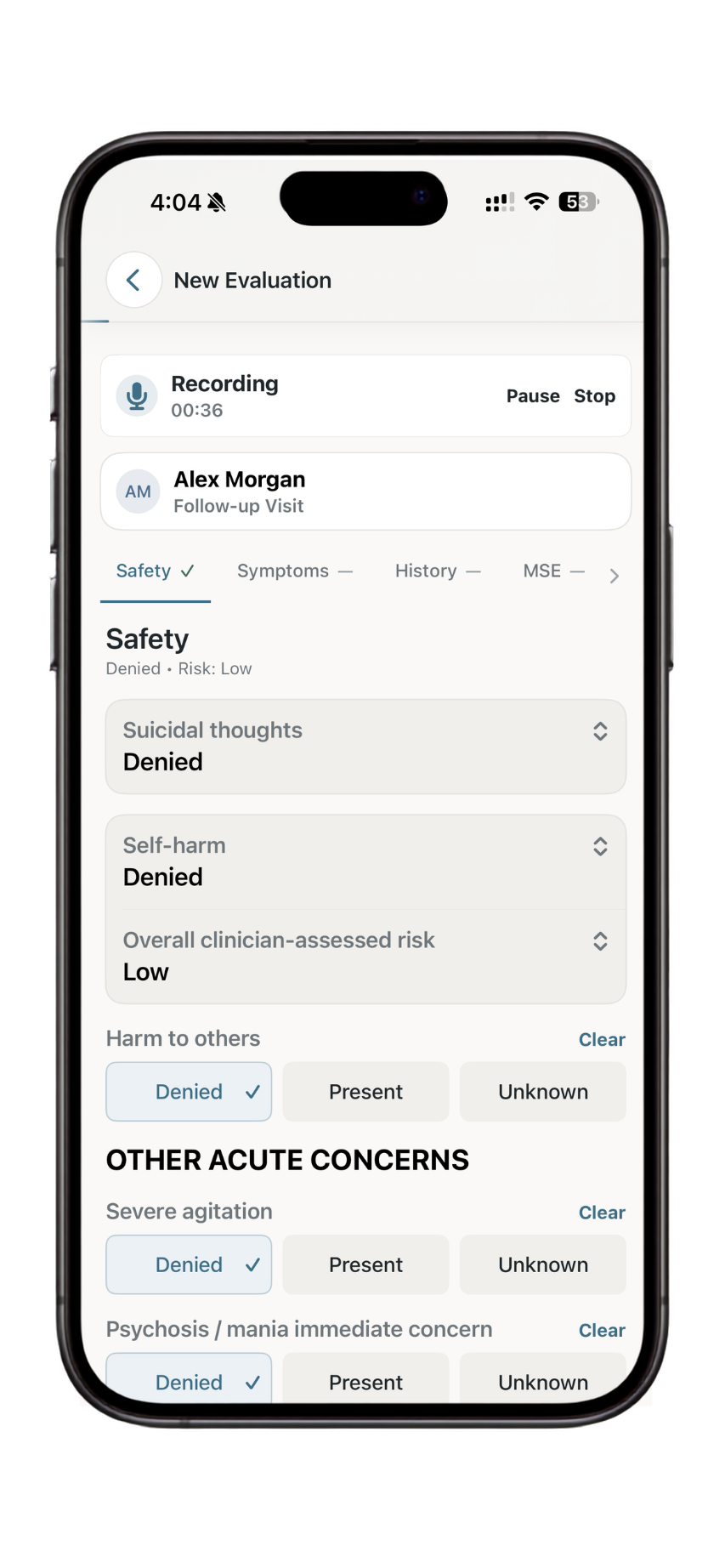
The Safety and Risk area within Dr. Notes for Psychiatrists helps organise relevant information such as:
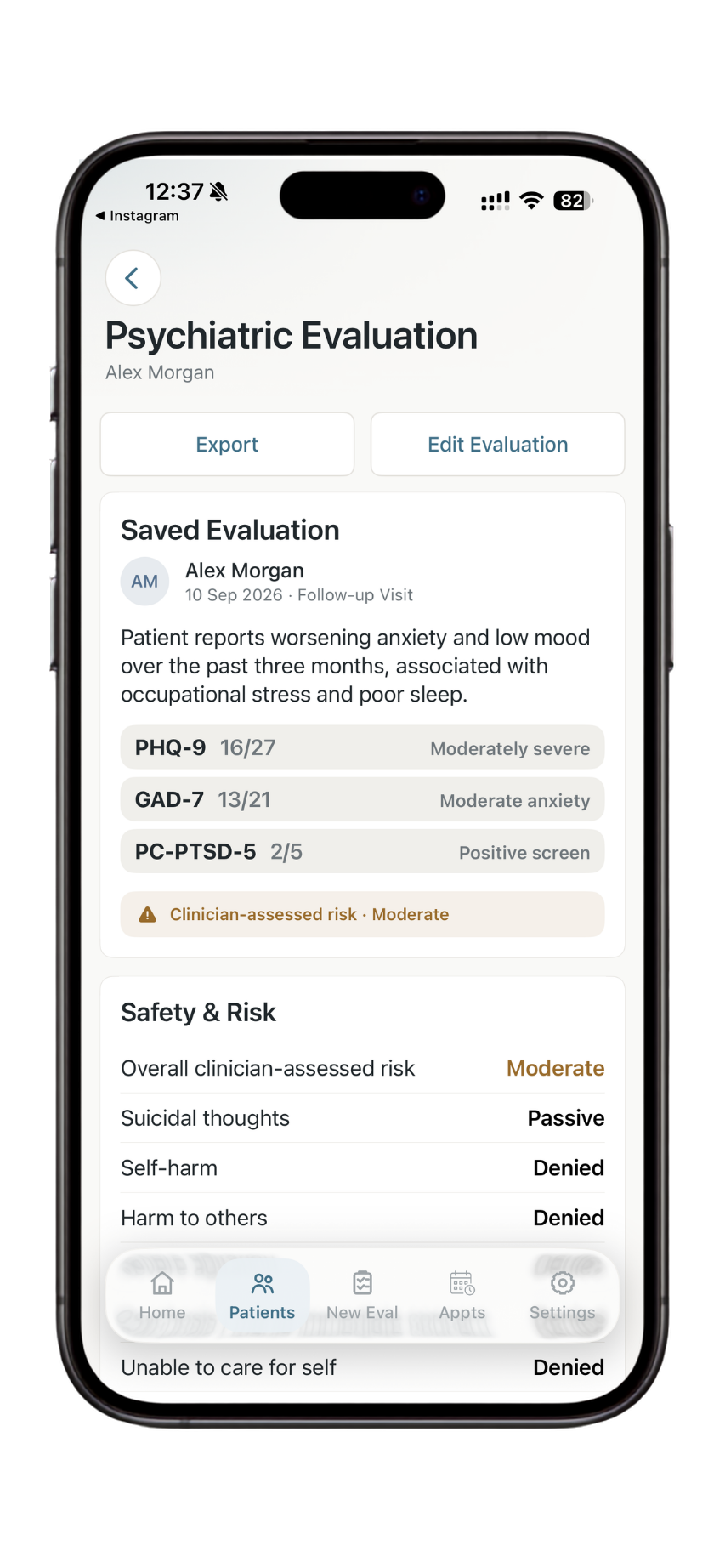
- Suicidal thoughts
- Passive death wishes
- Current intent
- Specific plan
- Access to means
- Previous attempts
- Self-harm
- Harm to others
- Other acute concerns
- Protective factors
- Clinical safety notes
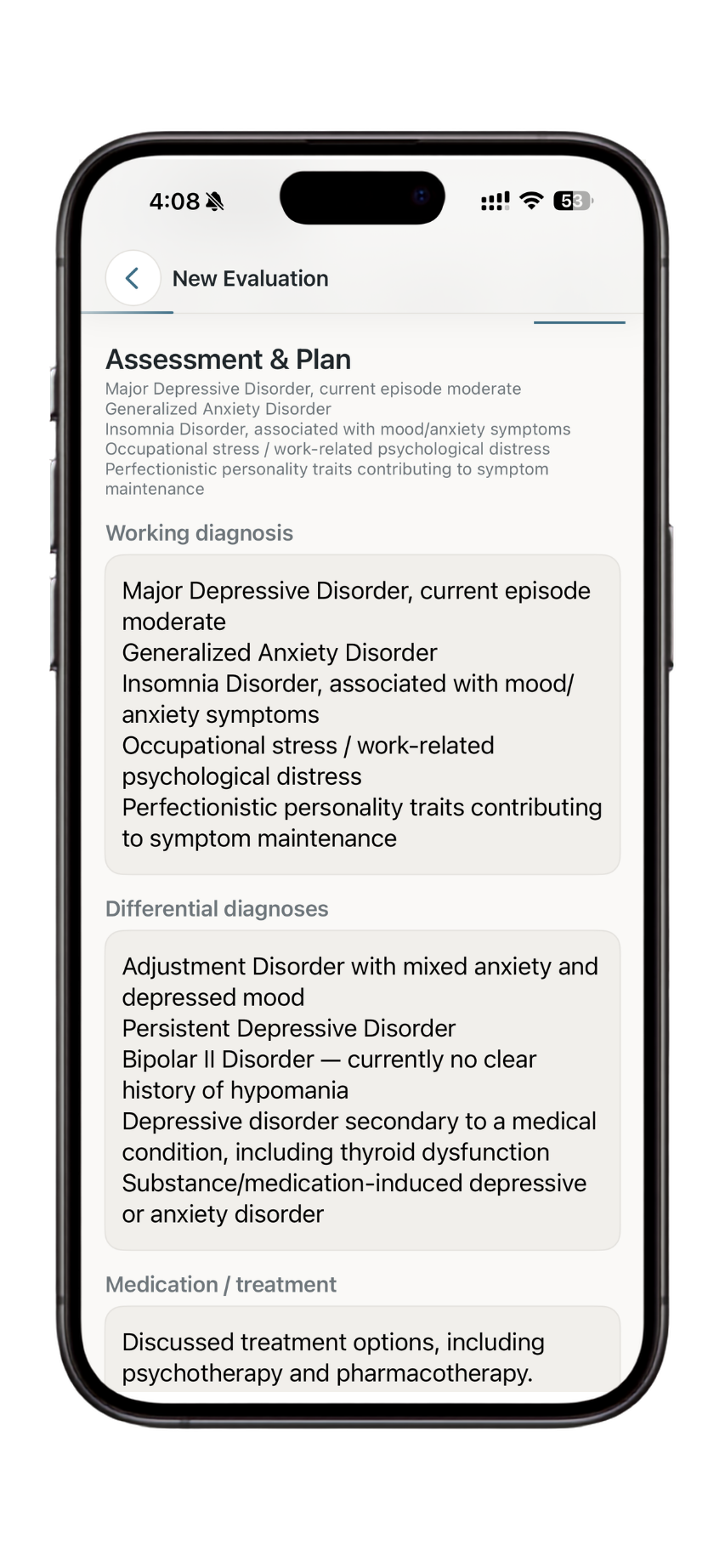
The wider psych evaluation connects the safety assessment with symptoms, history, Mental Status Examination, clinical formulation, assessment, treatment planning and follow-up.
Before completing the evaluation, the psychiatrist can review the information together, correct or clarify entries and create a clear final note for the next visit.
Dr. Notes supports structured documentation. It does not calculate certainty, predict an individual patient’s behaviour, diagnose the patient or replace clinical judgement.
Clear documentation supports connected care
Alex leaves the appointment with more than advice.
He leaves with a plan he helped create, a sister he has agreed to contact, a telephone review scheduled for the next day and another consultation already arranged.
His psychiatrist leaves with a clear record of what Alex said, what she assessed, why she selected outpatient management and what actions were taken.
That is the purpose of good suicide risk documentation. It is not simply about completing fields or protecting a record. It is about preserving the reasoning, decisions and human conversation behind the care.
Dr. Notes for Psychiatrists helps keep that information organised, so the psychiatrist can return to the next consultation with the right context—and Alex does not have to begin his story all over again.
Learn more: Dr. Notes for Psychiatrists
Comments
Have a question, or a way you handle this in your own practice? Share it below.