
Therapy does not always produce a dramatic breakthrough that clearly shows everything is working. More often, progress appears through small but meaningful changes: a patient responds differently to conflict, recovers more quickly after a difficult day or begins to recognise patterns without the therapist pointing them out.
That can leave even experienced therapists asking an important professional question:
How do you know if you are doing a good job as a therapist?
The answer cannot be based on one session, one symptom or whether a patient keeps returning. It comes from observing meaningful change over time—in symptoms, daily functioning, emotional wellbeing, relationships and independence.
Watch this short video to see some of the signs therapists can look for when evaluating a patient’s progress.
Signs a therapist is doing a good job
A therapist may be doing a good job when patients manage their difficulties more effectively, understand themselves better, regulate their emotions and feel more confident. Healthier relationships, improved daily functioning and greater independence can also indicate progress.
No single sign tells the whole story. Progress is best understood by considering the patient’s goals, feedback and clinical presentation across multiple sessions.
What good therapeutic work looks like
There are two connected ways to think about whether a therapist is doing a good job: the quality of the therapist’s work and the changes occurring in the patient’s life.
In a recent discussion among clinicians on r/Psychiatry, contributors highlighted functional improvement, patient-generated insight, emotional regulation, stability and growing independence. They also noted that rapport matters because it allows therapists to listen carefully, discuss difficult truths and continue meaningful therapeutic work.
A therapist’s personal and professional qualities help create the conditions for that progress. Themes explored in the video “11 Signs You Would Make a Good Therapist or Counselor” include creating a safe, non-judgemental space and developing the qualities needed to support another person responsibly.
In practice, helpful therapist qualities may include:
- Listening with attention and curiosity.
- Showing empathy without judgement.
- Creating enough safety for honest conversations.
- Communicating clearly and challenging the patient respectfully when appropriate.
- Maintaining professional boundaries and recognising the limits of one’s role.
- Reflecting on feedback, seeking supervision and continuing to learn.
- Helping the patient build agency rather than dependence.
These qualities are important, but they should not be considered in isolation. Warmth and rapport should support meaningful goals, while clinical skill should translate into changes that matter to the patient. The clearest picture comes from considering the therapeutic process, patient feedback and progress over time together.

Try Dr. Notes on Mobile
- Clinical Voice and Text Notes
- Organised Patient Records
- Appointments and Reminders


How Dr. Notes supports therapists
Recognising progress requires therapists to observe and compare changes across multiple sessions. However, small improvements in symptoms, coping, relationships and daily functioning can be difficult to remember over time.
Dr. Notes is an offline-first clinical documentation and practice-management app that helps therapists record and organise the patient’s care journey. Therapists can create clinical voice notes or text notes, document treatment goals and patient responses, and manage patient profiles, medications, allergies, appointments, reminders and billing in one place.
By reviewing information from earlier and recent sessions, therapists can recognise meaningful changes, identify continuing concerns and plan the next step in care.
Dr. Notes does not determine whether a therapist is doing a good job or replace professional judgement. It provides an organised clinical record that helps therapists understand the patient’s progress more clearly.
The following signs show how therapists can recognise progress and how different Dr. Notes screens can help them document it.
1. The patient’s difficulties become more manageable
One of the clearest signs of progress is that the difficulty that brought the patient to therapy becomes less dominant in their life.
This may mean:
- Distressing symptoms occur less frequently.
- Symptoms feel less severe when they occur.
- Difficult experiences cause less disruption.
- The patient recovers more quickly after setbacks.
- Everyday responsibilities become easier to manage.
Improvement does not always mean that every symptom disappears. A patient may still experience anxiety, grief, low mood or intrusive thoughts while becoming better able to understand and manage them.
The useful question is not only, “Is the symptom still present?” It is also, “How much control does this symptom have over the patient’s life now compared with when therapy began?”
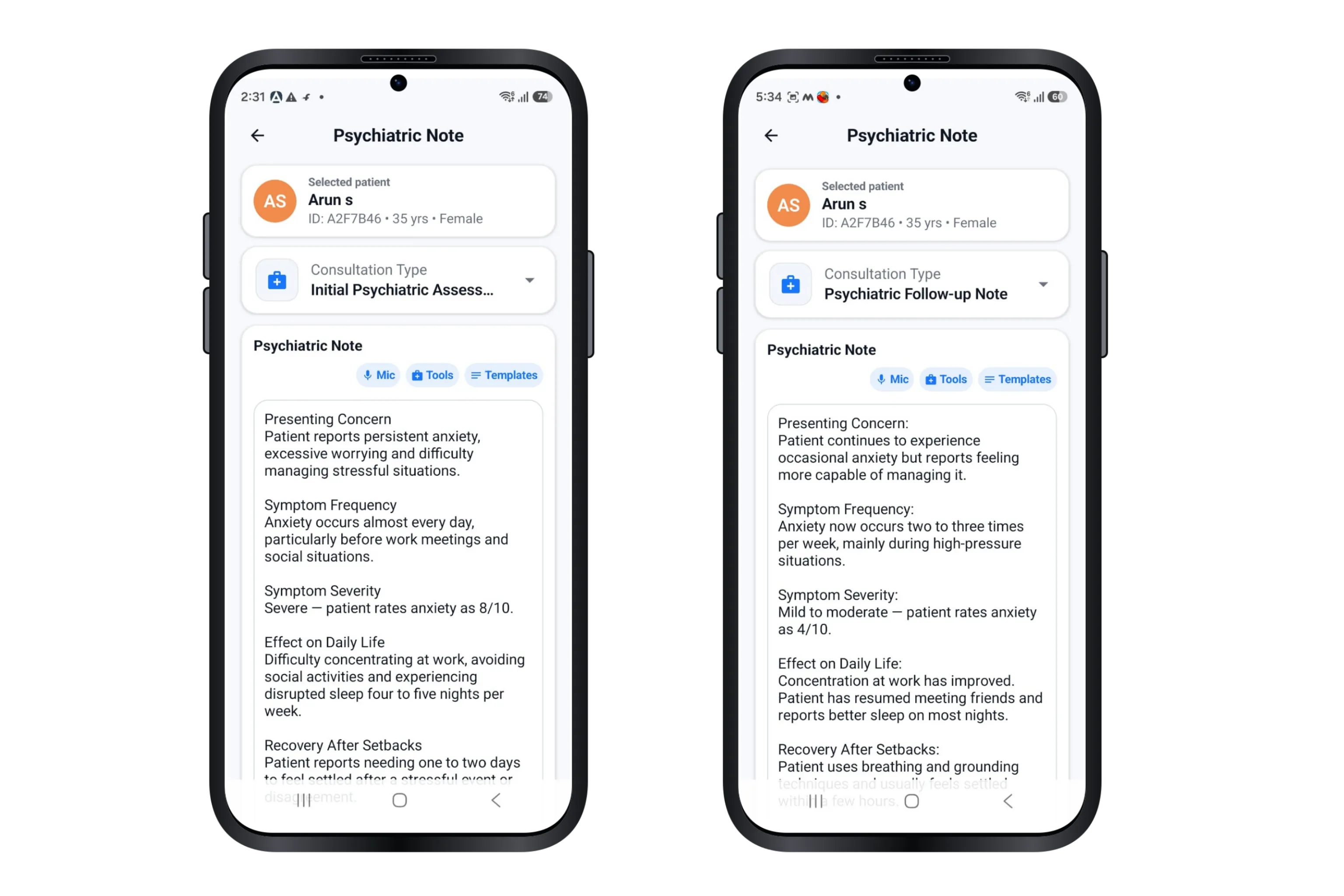
The therapist can record the patient’s starting concerns in the initial clinical note, including symptom frequency, severity and effect on everyday life. In later sessions, new observations can be added as voice notes or text notes. Comparing earlier and recent notes helps the therapist see whether the difficulty is becoming more manageable instead of relying only on memory.
2. Daily functioning improves
Symptom change matters, but functional improvement often provides a clearer picture of whether therapy is making a practical difference.
A patient may begin to:
- Attend work or study more consistently.
- Communicate more effectively in relationships.
- Reconnect with friends or family.
- Maintain healthier routines.
- Set and respect personal boundaries.
- Make decisions with greater confidence.
- Return to activities they previously avoided.
These changes may look small from the outside, but they can represent significant progress. For someone who has been withdrawing from others, answering a friend’s call may be an important functional milestone. For another patient, progress may mean attending work despite anxiety or handling a disagreement without becoming overwhelmed.
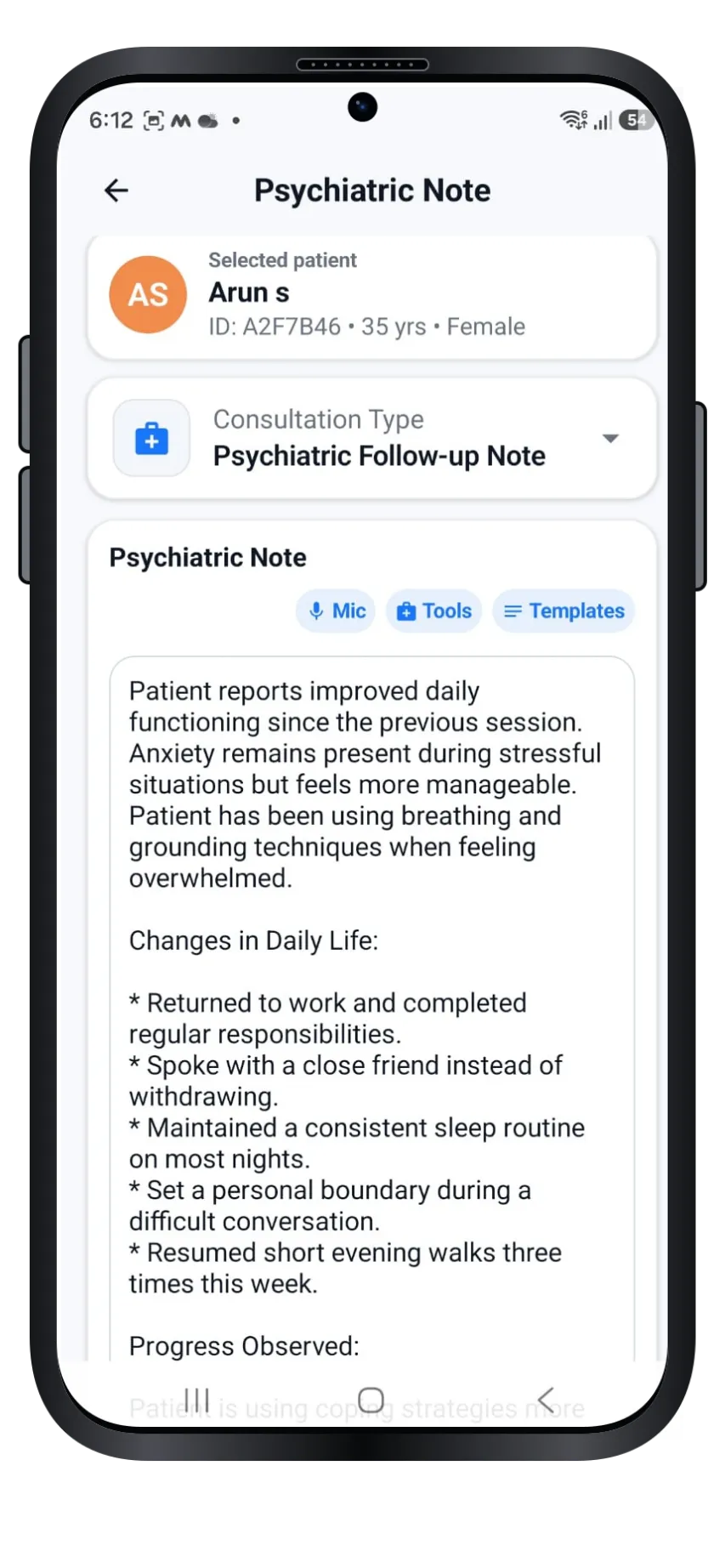
Dr. Notes gives the therapist a place to record real-life changes after each consultation. Improvements in work, study, relationships, routines, boundaries, decision-making and social activity can be added to the clinical note. Reviewing note history makes small functional milestones easier to recognise across several visits.
3. The patient develops insight of their own
Early in therapy, the therapist may do much of the work of identifying patterns, making connections and introducing new ways of understanding an experience.
As therapy progresses, the patient may start doing more of this themselves. They may say:
- “I noticed that I withdraw whenever I feel criticised.”
- “I think I reacted that way because I was afraid of being rejected.”
- “This feels similar to a pattern we discussed earlier.”
This shift matters. It suggests that the patient is not only listening during sessions but also developing the ability to reflect on their thoughts, emotions and behaviour. Insight becomes particularly valuable when it helps the patient make different choices outside the therapy room.
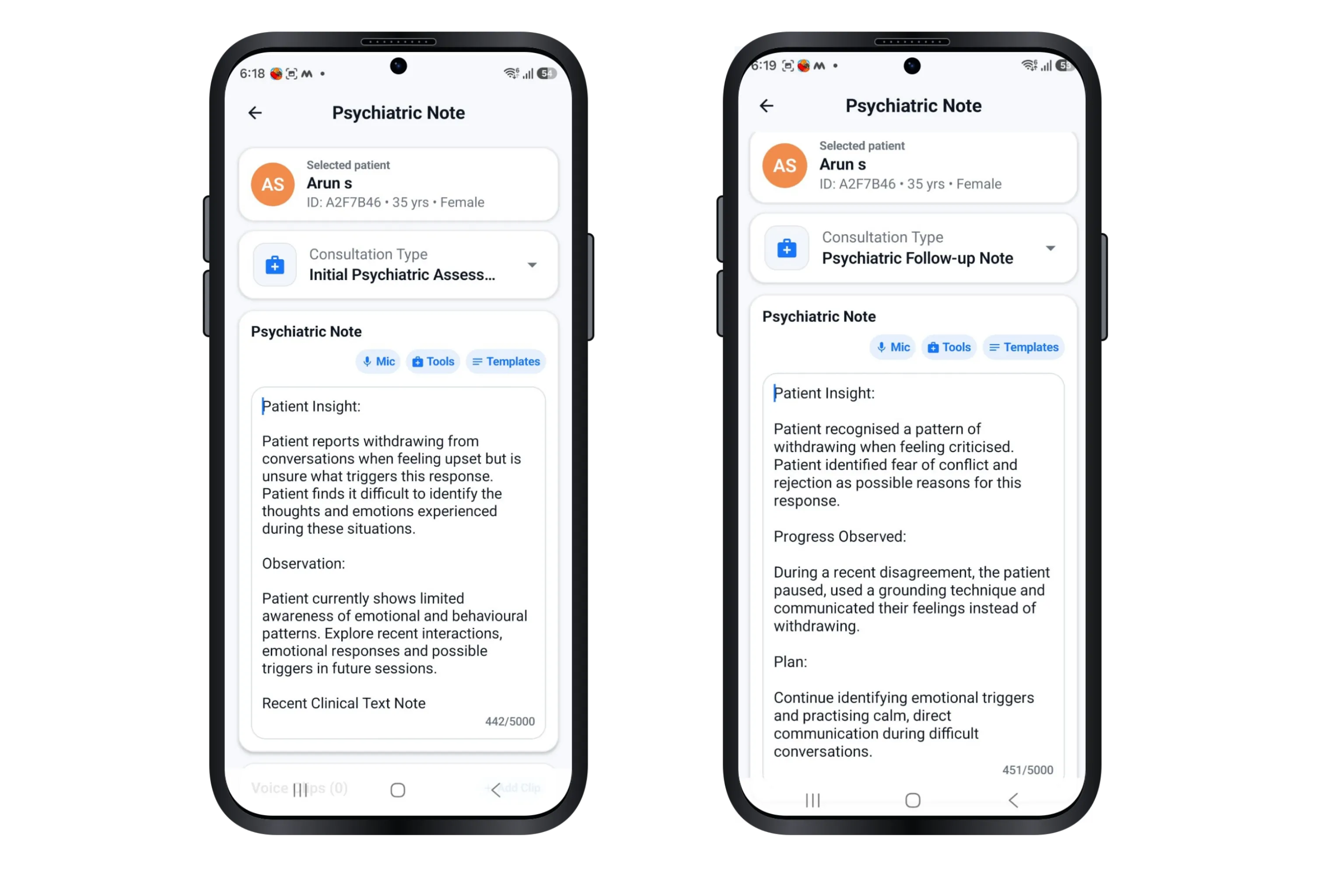
The therapist can document the patient’s observations, newly recognised patterns and changes in understanding within each session note. Recording the patient’s words or a concise clinical summary makes it easier to see when insight is beginning to come from the patient rather than only from the therapist.
4. Emotional regulation and resilience improve
Effective therapy does not remove every difficult emotion. It can help patients experience emotions without being completely controlled by them.
Signs of stronger emotional regulation may include:
- Recognising emotions earlier.
- Naming feelings more accurately.
- Tolerating distress without acting impulsively.
- Using coping strategies in real situations.
- Responding thoughtfully rather than reacting automatically.
- Returning to a stable state more quickly.
Resilience can also be seen in how a patient handles setbacks. The goal is not a life without difficulties, but a greater ability to adapt, recover and continue moving forward.
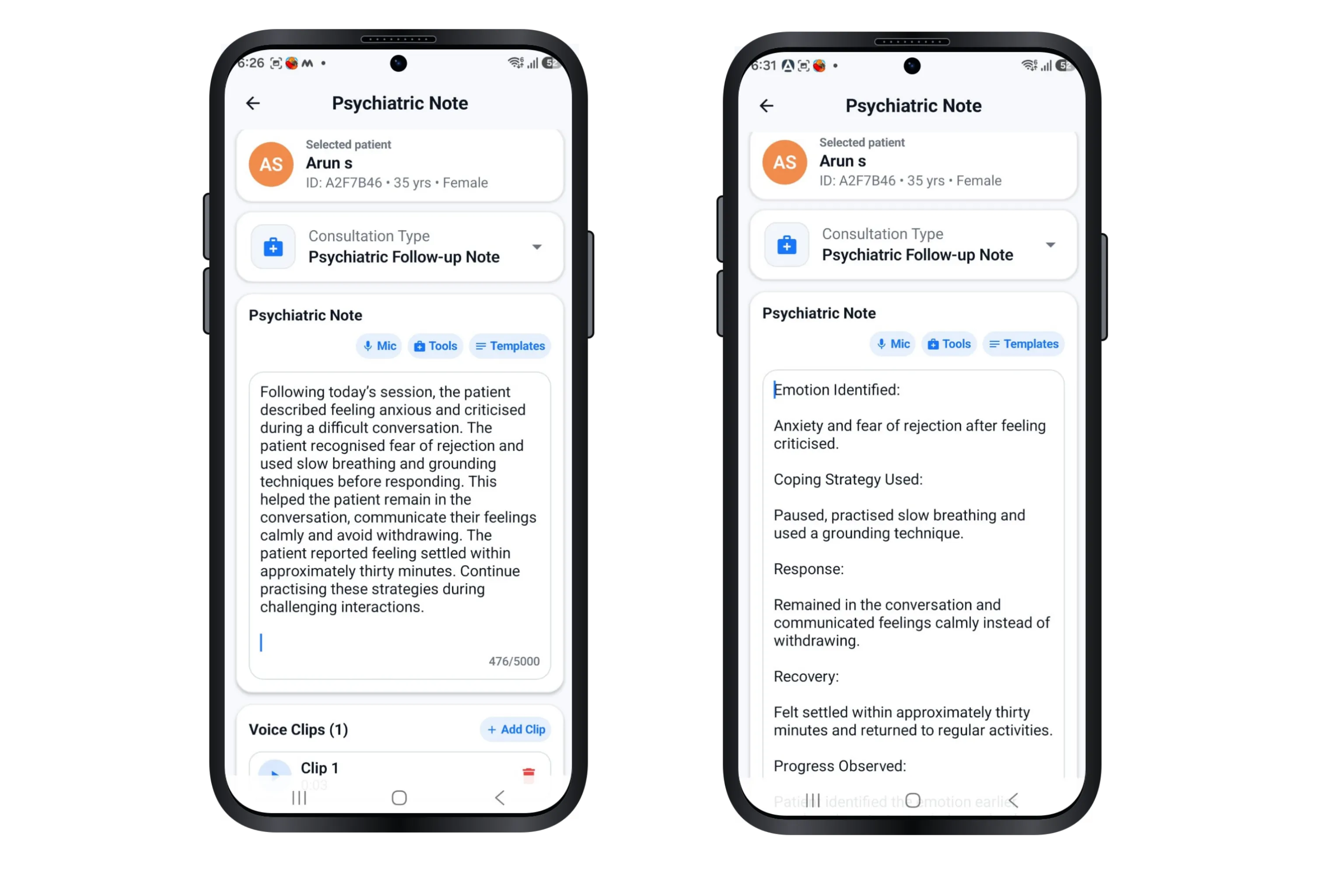
After a session, the therapist can use a clinical voice note or text note to record the emotions discussed, coping strategies practised, the patient’s response and how long recovery took after a difficult event. Reviewing these details across visits can reveal whether emotional regulation and resilience are improving gradually.
5. The therapeutic relationship can hold honest conversations
A strong therapeutic relationship is not simply one in which every session feels comfortable. Helpful therapy may involve discussing avoidance, contradictions, unhelpful patterns or difficult truths.
The therapist may be doing effective work when they can raise these issues while the patient continues to feel heard, respected and emotionally safe.
Useful signs include:
- The patient can disagree openly.
- Misunderstandings can be discussed and repaired.
- The patient shares experiences they previously avoided.
- Feedback can be offered without causing shame or dismissal.
- Goals and expectations can be reviewed honestly.
Rapport is not the final outcome of therapy, but it creates the trust needed for meaningful therapeutic work.
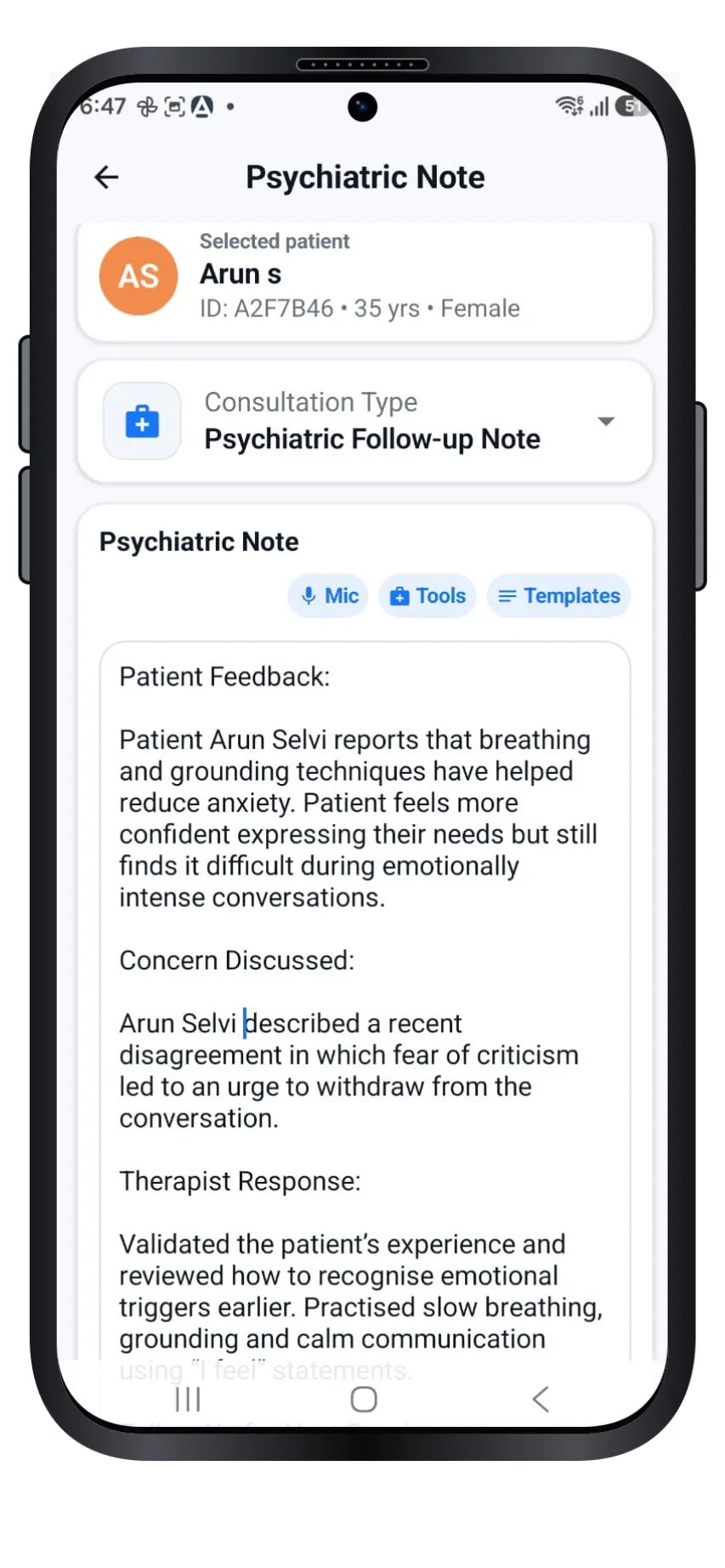
The therapist can record clinically relevant feedback, moments of disagreement, misunderstandings that were discussed and any agreed changes to the treatment plan. Reviewing earlier notes before the next consultation can help the therapist remember what needs to be revisited and maintain continuity in the therapeutic relationship.
6. Skills begin to appear outside the session
Therapy should gradually influence the patient’s life beyond the consultation itself.
A patient may begin using grounding techniques during distress, challenging an unhelpful thought, communicating a need clearly or pausing before responding impulsively. They may use a skill imperfectly at first and then apply it more consistently over time.
Understanding a strategy during a session is not the same as being able to use it in everyday life. When therapeutic skills transfer into real situations, therapy is beginning to support lasting change.
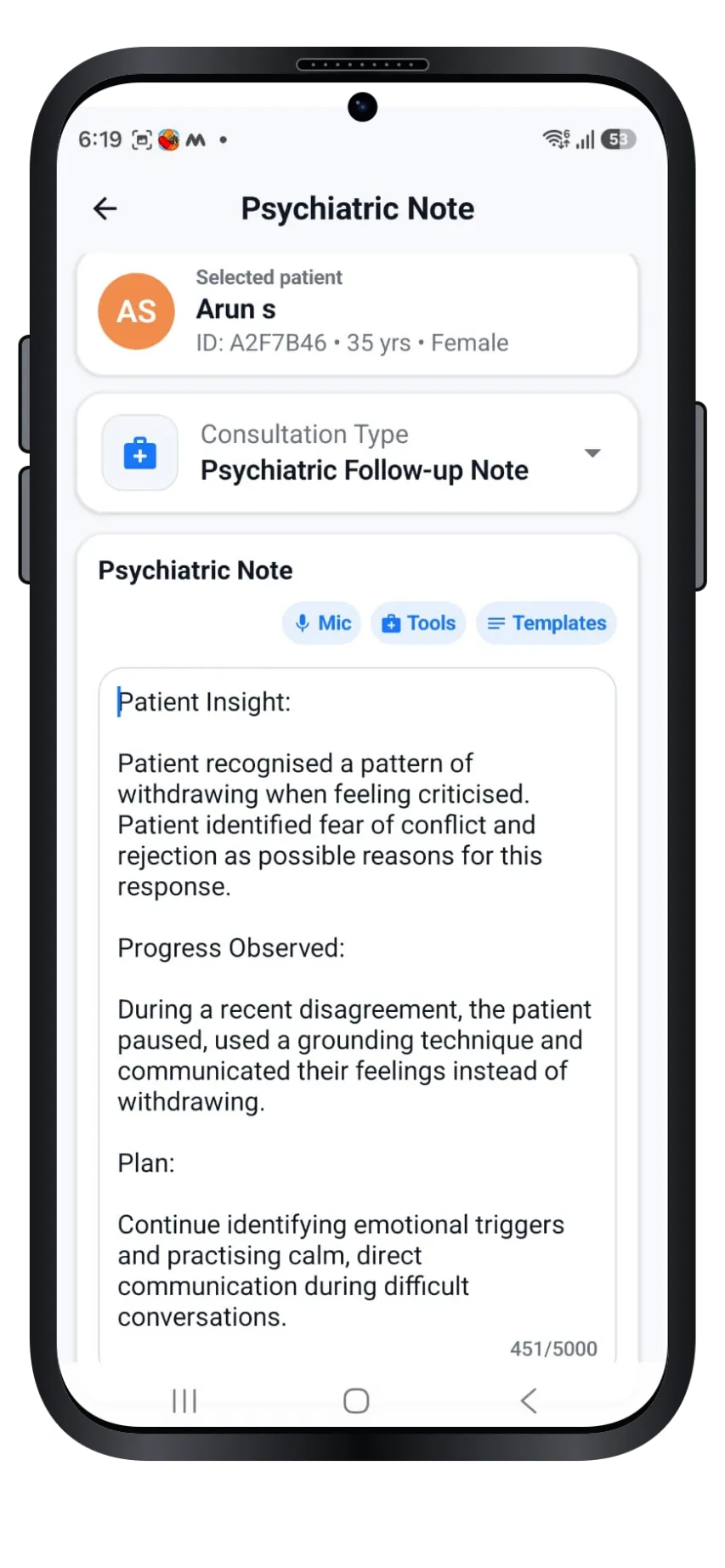
The therapist can record which coping strategy was discussed, where the patient planned to use it and what happened when they tried it. At the next visit, the earlier note can be reviewed and updated with the patient’s experience. This creates a clear record of which strategies are being used outside therapy and which may need further support or adjustment.
7. Stability can also be a meaningful outcome
Not every successful period of care produces visible improvement. For patients at risk of crisis, relapse or serious deterioration, maintaining stability can itself be an important clinical outcome.
Therapy may help a patient:
- Avoid further deterioration.
- Reduce the risk of crisis.
- Maintain essential routines.
- Continue engaging with care.
- Preserve important relationships or responsibilities.
Stabilisation should not be dismissed as “no progress”. At the same time, a prolonged period without improvement should prompt thoughtful review. The therapist may need to reconsider the goals, intervention or session frequency, or whether additional support or referral would be appropriate.
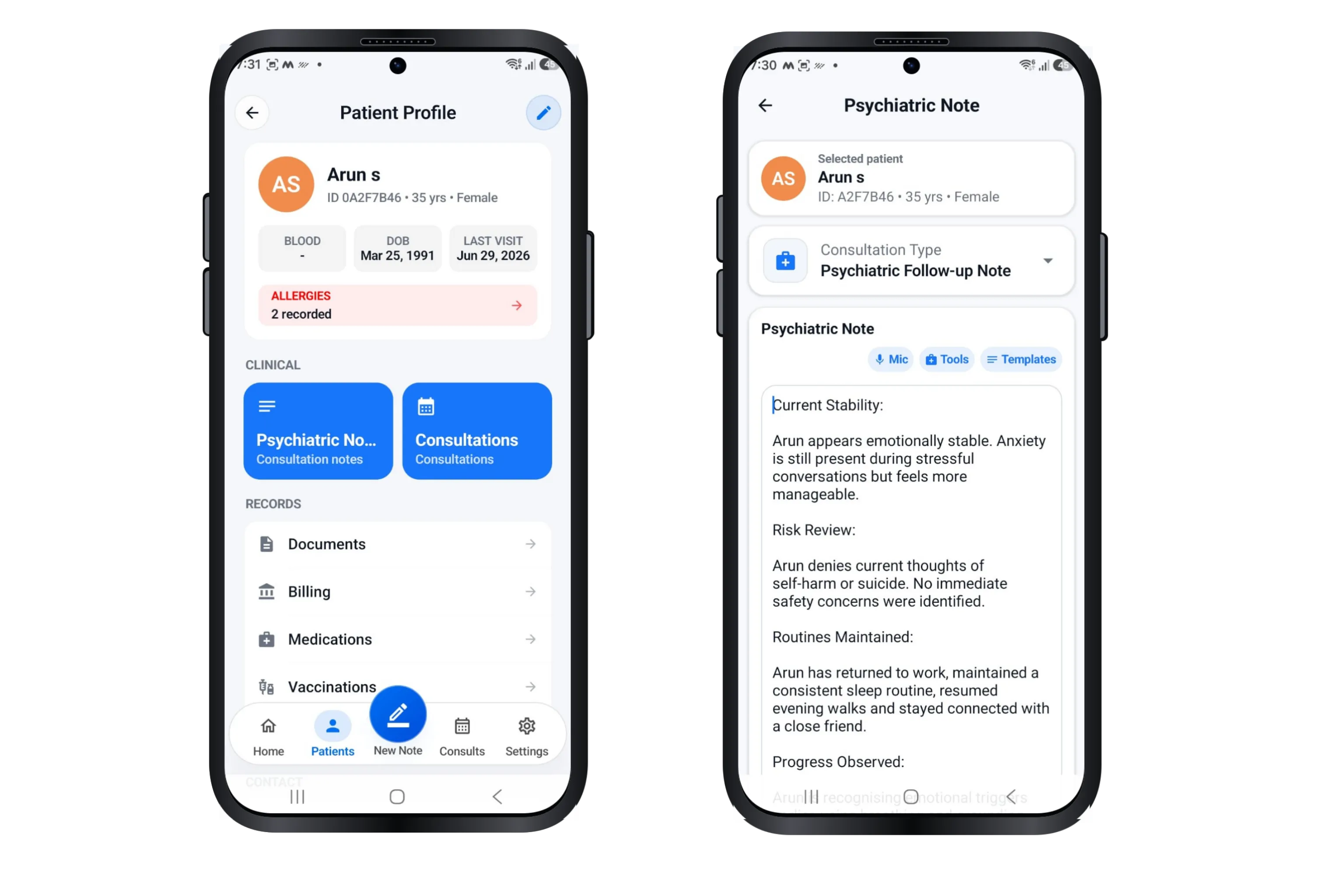
Consistent notes can help the therapist see that the patient has remained stable even when there is no dramatic improvement. The therapist can document changes in risk, routines, treatment engagement, important responsibilities and the plan for continued support. Relevant patient information, medications and allergies can also remain connected to the patient profile for quick reference during care.
8. The patient becomes less dependent on therapy
One of the most meaningful signs of effective therapy is growing independence.
As patients develop insight, skills and confidence, they may need less direction from the therapist. Sessions may be spaced further apart, the patient may manage difficulties more independently and both parties may begin preparing for a planned ending.
Ending therapy is not evidence that the therapeutic relationship has failed. When clinically appropriate, it can show that therapy has achieved its purpose: the patient is better able to navigate life using the capacities they have developed.
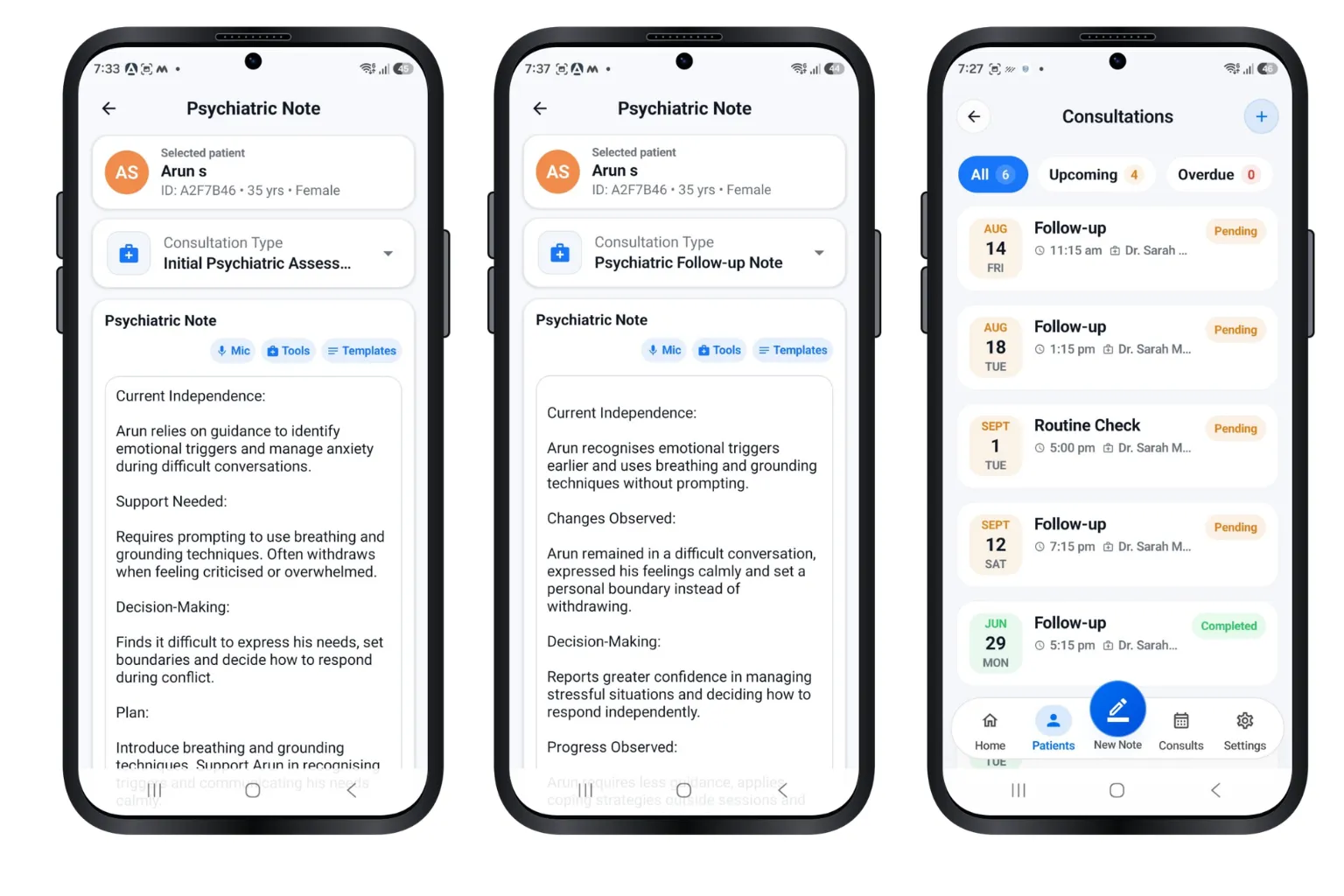
The therapist can compare notes from the beginning of care with recent sessions to identify greater confidence, more independent decision-making and a reduced need for guidance. Appointment history can show when sessions have been spaced further apart, while reminders can support a planned review or final follow-up.
Questions therapists can ask themselves
Regular reflection can help therapists look beyond their impressions of an individual session. Useful questions include:
- What brought this patient to therapy, and has that concern changed?
- Are the symptoms less frequent, severe or disruptive?
- Has the patient’s functioning improved at work, at home or in relationships?
- Is the patient developing and applying insight independently?
- Which interventions appear to help, and how is the patient responding?
- Are risk and stability changing over time?
- Does the patient feel that therapy is helping?
- Are the current goals still relevant?
- Is a different approach, consultation or referral needed?
- Is therapy supporting greater independence or unintentionally encouraging dependence?
Patient feedback, clinical supervision and appropriate outcome measures can add perspectives that the therapist’s own judgement may miss.
Why progress documentation matters
It is difficult to evaluate change over several weeks or months from memory alone. Each session can feel important while the broader direction of treatment remains unclear.
Consistent progress notes can help therapists compare the patient’s current position with their starting point. Useful details to record include:
- Presenting concerns and baseline functioning.
- Treatment goals.
- Symptoms and their effect on daily life.
- Interventions used during the session.
- The patient’s response.
- Functional milestones.
- Skills practised between sessions.
- Changes in risk or stability.
- Patient feedback.
- The plan for the next visit.
The aim is not to document every word spoken. It is to preserve the clinically relevant information needed to understand the care journey and make informed decisions.
How Dr. Notes can support progress reviews
Dr. Notes helps mental health professionals create clinical voice notes or text notes, organise patient information and review earlier consultations in one place. By documenting goals, interventions, responses and functional changes consistently, therapists can follow the direction of care across visits instead of relying only on memory.
Different screens support different parts of that review:
- Patient Profile: Keeps the patient’s essential information, medications and allergies connected.
- Clinical Notes: Records the starting concern, session observations, interventions, responses, risk, stability and next plan.
- Voice Notes and Text Notes: Help the therapist capture important details soon after the consultation while they are still fresh.
- Note History: Makes it easier to compare early and recent sessions and recognise gradual change.
- Appointments and Reminders: Support follow-up, review of coping strategies and planned changes in session frequency.
Dr. Notes does not decide whether therapy is effective, and it does not replace professional judgement, supervision, patient feedback or validated assessment tools. It supports the documentation that helps professionals reflect on progress and plan what comes next.
Frequently asked questions
Does regular attendance mean therapy is working?
Not necessarily. Continued attendance may reflect trust and engagement, but it does not by itself demonstrate improvement. Therapists should also consider symptoms, functioning, goals, patient feedback, risk, stability and the patient’s ability to use new skills outside sessions.
Is stabilisation a valid therapy outcome?
Yes. For a patient who is vulnerable to crisis, relapse or deterioration, maintaining stability can be clinically meaningful. The goals and expected outcomes should reflect the patient’s needs and circumstances.
When should a therapist reconsider the treatment approach?
If there has been little meaningful change over a prolonged period, it may be appropriate to review the goals, intervention, session frequency and patient feedback. Clinical supervision, consultation, additional assessment or referral may also be considered when appropriate.
Why are progress notes important in therapy?
Progress notes help therapists compare the patient’s current condition with their earlier presentation. They can reveal patterns in symptoms, functioning, responses to interventions, risk and progress that may be difficult to recall accurately over time.
Why being a therapist is meaningful
Questions about effectiveness are often connected to another question: Is being a therapist worth it? The work can be emotionally demanding, and progress may not always be immediate or dramatic. Yet being a therapist offers the opportunity to support people through difficult periods in their lives. Listening, understanding and teaching practical coping skills can make a meaningful difference. Seeing patients recognise their strengths, become more independent and move forward can make the work deeply rewarding.
The real measure of good therapy
There is no single test that proves a therapist is doing a good job. Progress may involve symptom relief, better functioning, healthier relationships, increased self-awareness, improved emotional regulation or greater stability during a vulnerable period.
The clearest overall sign is that the patient gradually becomes more able to understand themselves, manage difficulties and participate in life with greater freedom and independence.
Good therapy is not measured by how long a patient remains in treatment. It is measured by whether the work helps them move towards a life they can navigate more confidently on their own.
Sources and further viewing
- How do you know if you’re doing a good job as a therapist? — r/Psychiatry discussion
- 11 Signs You Would Make a Good Therapist or Counselor — YouTube
- Is It Worth Being a Therapist? — YouTube Short
The Reddit discussion reflects individual professional opinions, and the videos provide general educational perspectives. They should not be treated as formal clinical standards or a substitute for supervision, ethical guidance or evidence-based outcome assessment.
This article is for general informational purposes and is not a substitute for professional clinical guidance, supervision or jurisdiction-specific documentation requirements.
Track Therapy Progress More Clearly with Dr. Notes
- Voice and Text Clinical Notes
- Patient Profiles and Note History
- Appointments and Reminders
Comments