

It's 9:20 on a Tuesday. Marcus is prepping for the extraction of a cracked lower right molar — 46, non-restorable, treatment-planned six months ago at a checkup that felt unremarkable at the time. The chart says ramipril and atorvastatin, no allergies, no bleeding issues. The patient is 67, retired, drives himself. His wife came along "for company."
Marcus does the usual short update between gloving up. "Any changes to your health since we last saw you? Any new medications?"
"No, nothing."
Marcus reaches for the LA. From the corner, the wife: "Oh — but the heart tablets. After the little AFib scare in May."
Marcus stops. The heart tablets are Eliquis. Apixaban 5 mg twice a day. Started four months ago at the cardiology follow-up. The patient shrugs. "That's for my heart. It's not for teeth."
The extraction doesn't happen that morning.
The Gap Where This Lives
There is a very specific gap in every dental practice — solo, group, hospital — where a patient's medication list quietly diverges from the chart. The patient sees their GP or cardiologist between recall visits. A new script gets added. It goes into a blister pack next to the ramipril. From the patient's point of view, that's a heart thing. It has nothing to do with the dentist.
From your point of view, apixaban changes what happens in the next forty minutes. Bleeding risk on an extraction. Whether you need to liaise with the prescriber about interruption vs. continuation. Whether local haemostatic measures — tranexamic acid mouthwash, suturing over the socket, an oxidised cellulose plug — need to be set up before the flap goes anywhere.
The clinical stakes aren't just DOACs. The same "not for teeth" logic hides:
- Bisphosphonates and denosumab — MRONJ risk climbs quietly. A patient on oral alendronate for osteoporosis, or IV zoledronate for bone mets, may never mention it because "it's for my bones."
- Warfarin, clopidogrel, ticagrelor — Older but still everywhere. INR changes month to month.
- Immunosuppressants after a transplant — Infection profile, healing, pre-med decisions.
- SSRIs, tricyclics, some antipsychotics — Dry mouth, caries risk, LA interactions.
- Calcium-channel blockers, phenytoin, ciclosporin — Gingival overgrowth showing up as a "hygiene problem."
- GLP-1 agonists — Delayed gastric emptying matters if IV sedation is on the day's list.
None of these are exotic. All of them get missed the same way: the patient says "no changes," you're between two other patients, and the appointment moves on.
What The Guidance Actually Says
The ADA Council on Dental Practice is unambiguous:
"Active patients of record should review and update their history at every visit. All patients should complete a new health history form every two years."
— American Dental Association, Medical/Dental Health History guidance
The Dentists Insurance Company (TDIC), quoted by the California Dental Association, is more specific about the paper trail:
"TDIC advises that the patient (or the legal guardian if the patient is a minor) review, update and sign a health history form at every appointment or at least every six months."
— TDIC via California Dental Association
Neither of these is controversial. Neither is news to a working dentist. The gap is between what the guidance asks for and what actually happens in the ninety seconds between one patient sitting up and the next one walking in.
The Hygienists Have Been Saying This For Years
Read anything the hygiene community writes about medical history and the same theme comes up: patients don't withhold information out of spite. They just don't think it's relevant to teeth.
"Patients are so quick to tell us no change or that nothing pertains to their teeth in regards to their medical history."
— Danielle Luhring, BHS-DH, Today's RDH
"Medical status can change in just one day, so it is our responsibility to use good judgment and make sure we become familiar with any medical concerns or changes, document them, and provide an acknowledged signature."
— Samantha Via, RDH, Today's RDH
The subtle point in both articles: a blanket "any changes?" is the worst-performing question. It rewards a fast "no." What actually surfaces the apixaban is a more awkward version — are you seeing any other doctors, did anything change with your heart or blood pressure, did anyone start you on anything new even if it's not for teeth — asked with the previous medication list visible in front of you, so you can point at each line.
Where The Miss Actually Happens
In Marcus's clinic the update lives in three places at once. There's a paper form the patient signed at their new-patient exam in 2022. There's a tick-box field in the practice management software that says "medical history reviewed" — nobody remembers who ticked it or when. And there's whatever Marcus remembers from the last conversation.
When those three things disagree — and they always do, eventually — the patient's memory is the tiebreaker. A patient who has been on apixaban for four months has stopped noticing it. It's a white pill in the morning and a white pill at night. Ramipril is also a white pill. So is atorvastatin. "No new medications" isn't a lie. It's a reasonable summary of a life that hasn't felt any different since May.
Where Dr. Notes Fits
Dr. Notes isn't going to fix the human problem — patients will keep under-reporting their medications for as long as there are patients. What it changes is what you are looking at when you ask.
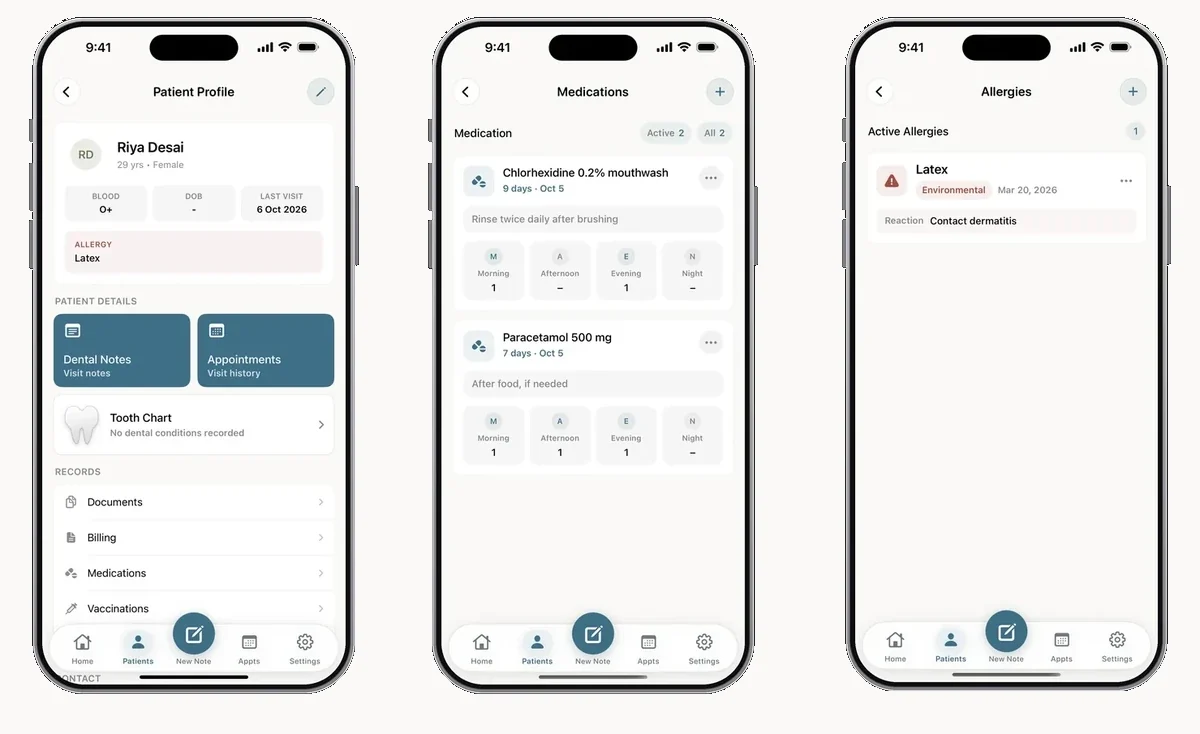
1. Review the recorded medication list before asking. From the patient profile, Marcus can open the medication record and review the last recorded medicines and medical flags. He can name the existing entries — ramipril and atorvastatin — and ask whether anything has been added. That gives him a specific starting point for the conversation.
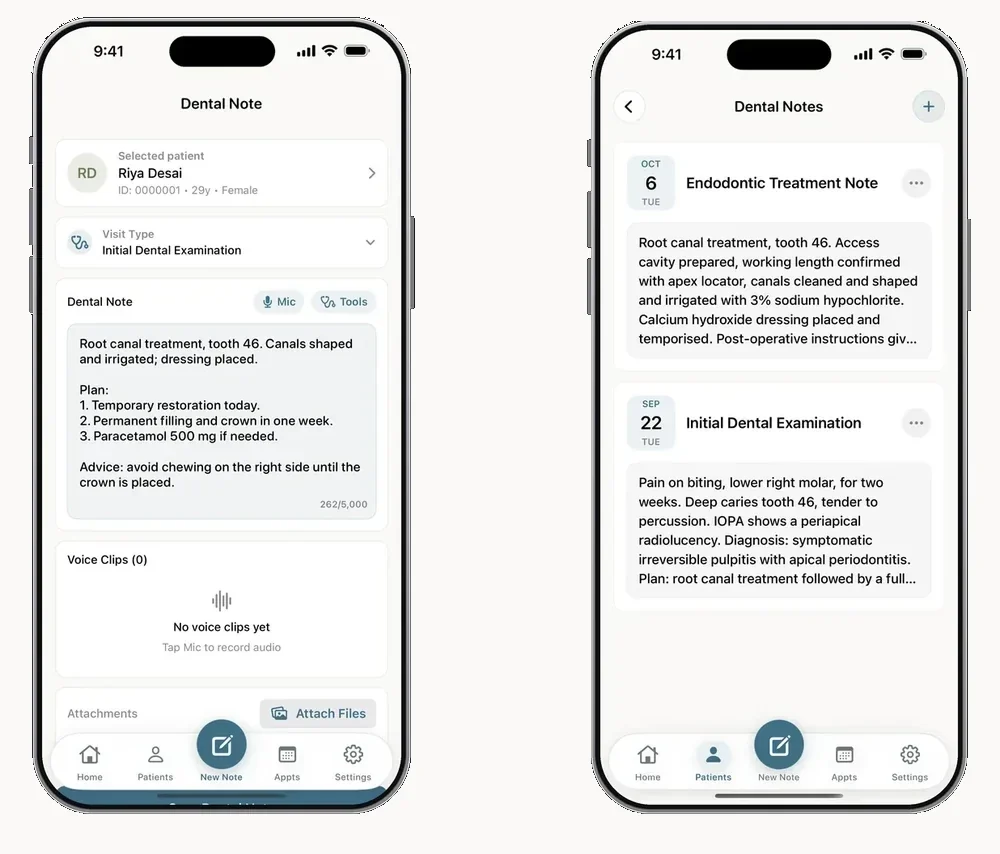
2. Record the patient's report while clarifying the change. Marcus can dictate or type a clinical note during the conversation, capturing the reported medicine, dose, start date and prescriber. He can then verify those details and update the medication record separately. Dictation captures the note; it does not automatically reconcile or verify a medication list.
3. Keep the record available on the device. Dr. Notes is designed to work offline, so Marcus can carry the device and open the same patient record in the operatory, on a domiciliary visit or at a community clinic.
Related dental tools: Use the Tooth Chart to record tooth-specific findings, or the Dental Local Anaesthetic Maximum Dose Calculator for a separate local anaesthetic dose check. That calculator does not assess anticoagulant-related bleeding risk or guide apixaban decisions.
The practical routine is simple: review the current list, document what the patient reports, then follow the acknowledgement process used in your practice. Dr. Notes keeps the patient record and visit notes available during the conversation, while the patient and his wife are still there to clarify details.
A Realistic Change, Not A Big One
- Before each patient — open the profile and review the recorded medication list on the phone.
- Then ask — "still on the same list, or has anything been added or changed?" Point at each line if the patient hesitates.
- If there's a change — record the patient's report in a visit note, verify the details you can, then update the medication record.
- Then decide — proceed, defer, liaise. The decision is yours; use the visit note to record the information reviewed and the next step.
Marcus's Tuesday didn't end badly. The extraction was rebooked, a short note went to the cardiologist, tranexamic acid was on the tray at the next appointment, and the socket healed. The reason it didn't end badly was the wife. The point of the last-visit view is that you don't have to depend on the wife.
Dr. Notes is on the App Store and Google Play — try it on one recall column and see what "any changes?" turns into when you're both looking at the same list.
Comments
Have a question, or a way you handle this in your own practice? Share it below.