
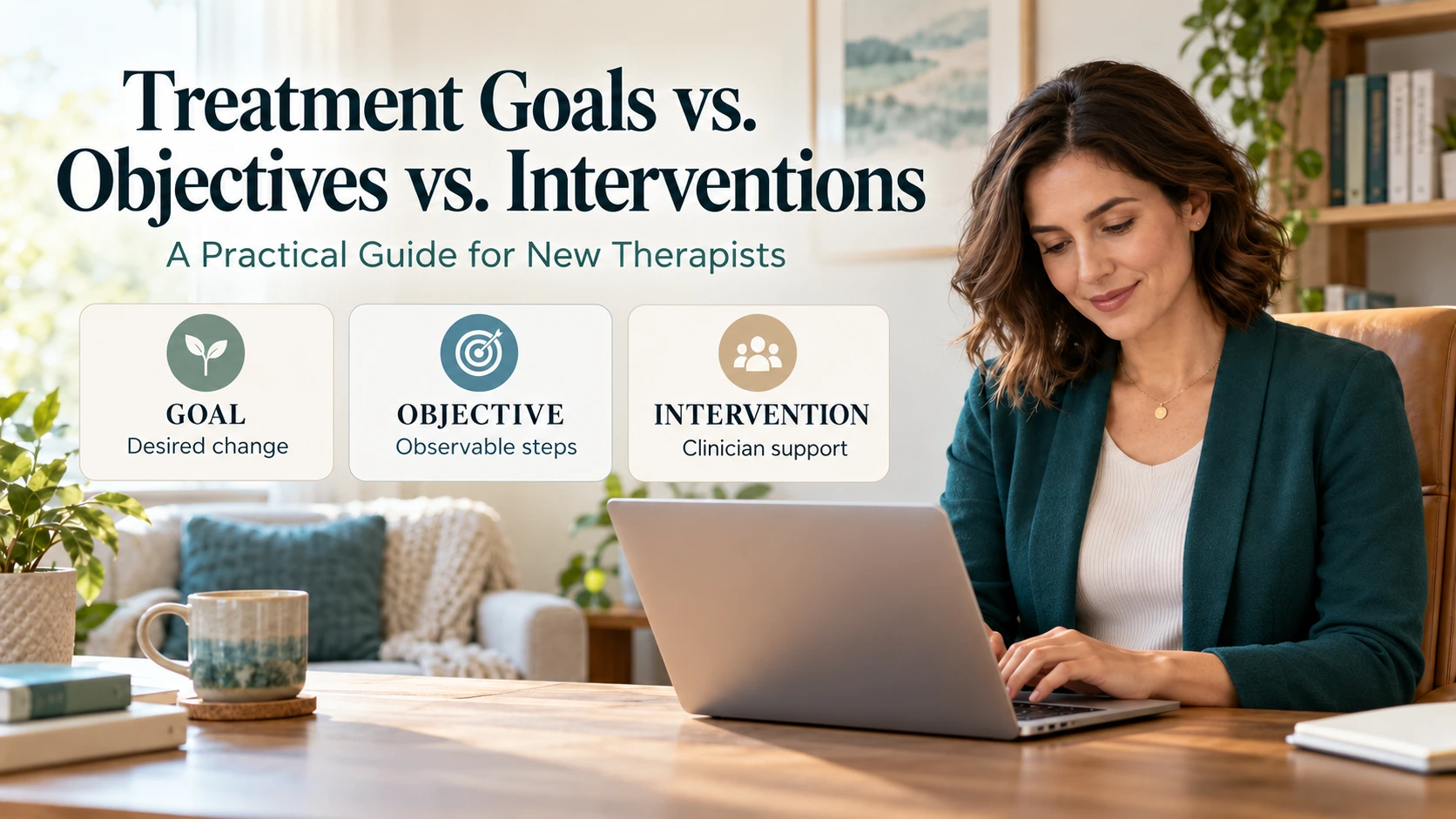
Writing a treatment plan can feel difficult when you are new to clinical practice. You may understand the client’s concerns but still struggle to turn them into clear goals, objectives and interventions.
This article was inspired by a discussion on r/therapists about learning clinical documentation . A new MSW graduate described spending considerable time on notes and struggling with an expectation to write three treatment goals with two objectives each.
Their question highlights a useful distinction: knowing what you want to work on with a client is different from knowing how to document it.
The Reddit discussion identifies a learning need. The fictional example below illustrates one way to organize a plan, which clinicians should adapt through supervision, clinical judgment and applicable documentation requirements.
Understand the Four Parts of a Treatment Plan
A useful starting point is to give each part a separate purpose.
| Component | Question It Answers |
|---|---|
| Problem | What concern is affecting the client’s life? |
| Goal | What meaningful change does the client want? |
| Objective | What observable steps will help us review progress? |
| Intervention | What will the clinician do to support that progress? |
The parts should connect. The problem provides the reason for treatment, the goal identifies its direction, the objectives make progress easier to review, and the interventions describe the planned therapeutic work.
Example: Practising a boundary-setting response is a client objective. Using role-play to help the client practise is a clinician intervention.
Difficulty Setting Boundaries
Consider an adult client who frequently agrees to additional family responsibilities despite feeling overwhelmed.
They worry about disappointing relatives and find it difficult to communicate their limits. During discussion, the client identifies a priority: being able to decline some requests while maintaining relationships that matter to them.
The following example shows how this concern can be organized into a treatment plan using the Dr. Notes Therapy Note Builder.
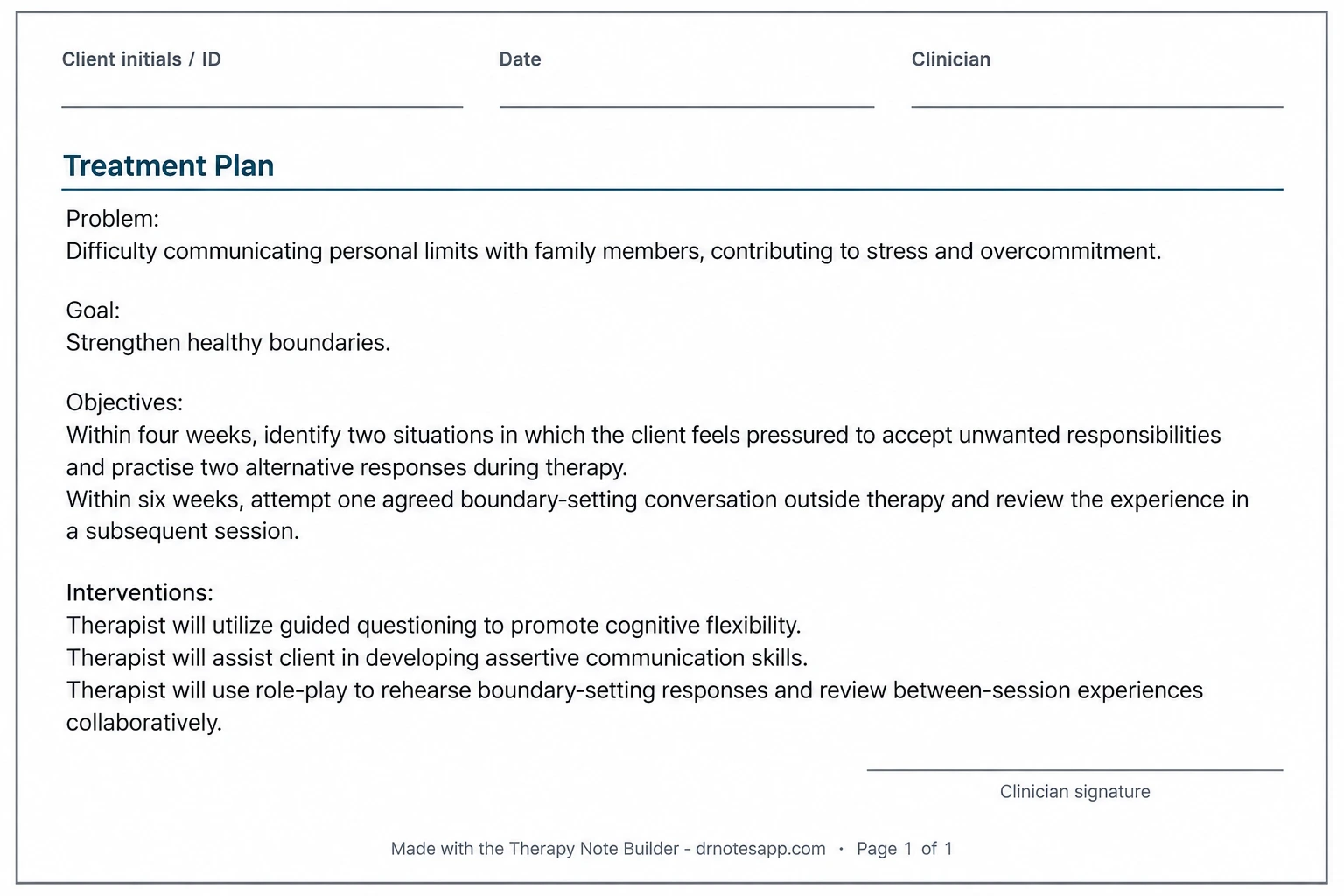
The goal gives the plan a direction: strengthen healthy boundaries. The objectives describe steps the client can attempt, while the interventions explain how the clinician will support those steps.
Boundary-setting treatment plan created with the Dr. Notes Therapy Note Builder.
The goal gives the plan a direction: strengthen healthy boundaries. The objectives describe steps the client can attempt, while the interventions explain how the clinician will support those steps.
The numbers and timeframes are illustrative and should be individualized. Progress may include preparation, attempts, identifying barriers and learning from the experience.
What If Your Workplace Requires Several Goals?
The clinician in the Reddit discussion described difficulty meeting an expectation for multiple goals and objectives.
An organizational format may require clarification with a supervisor. It should not lead to inventing concerns or dividing one objective into several nearly identical statements.
Where a client has distinct needs, separate goals may be useful. Where concerns are closely connected, discuss how to represent them accurately within the required format.
Ask:
- Does each goal address an identified client need?
- Are the objectives meaningfully different?
- Can the clinician and client review progress toward them?
- Do the planned interventions support those objectives?
A longer plan is not automatically a more useful plan.
What Happens When Therapy Changes Direction?
A treatment plan provides direction, but sessions may bring unexpected concerns, new information or changing priorities.
In the boundary-setting example, the client might discover that one particular relationship needs attention before attempting a conversation. They may also decide that an objective no longer reflects what they want.
At review points, consider:
- Does the goal still reflect the client’s priorities?
- What progress, attempts or barriers have emerged?
- Are the interventions helping?
- Should an objective, timeframe or treatment approach change?
Document relevant changes using your organization’s process. Follow applicable requirements for review dates, signatures and amendments.
Connect Progress Notes to the Plan
A progress note can explain what happened in a particular session and how it relates to the agreed treatment direction.
In this example:
The client identified two family situations associated with difficulty declining requests. The clinician used guided questioning and role-play to explore anticipated reactions and practise alternative responses. The client developed one response they felt comfortable trying. They reported continued concern about family conflict. The next session will review any attempts, barriers and whether further preparation is needed.
This example records the work performed, the client’s response and the next step. Use it as an illustration; actual notes should accurately reflect the session.
Organize Your Wording With the Dr. Notes Therapy Note Builder
The free Dr. Notes Therapy Note Builder includes a Treatment Plan template organized into Problem, Goal, Objective and Intervention sections.
You can select relevant phrases, add custom wording and edit the assembled draft.
Use the available statements as a starting point, then personalize the wording to reflect the client’s actual concerns, agreed objectives and intended therapeutic work.
Before transferring the draft to your authorized record system, check that:
- Every selected statement applies to the client.
- The objectives reflect what was agreed.
- The interventions describe work you intend to provide.
- Any numbers or timeframes are appropriate.
- Unnecessary or unsupported wording has been removed.
Important: Sign-in is required to view the generated draft and to copy, print or download it. The Builder helps organize wording; clinical decisions and checks against documentation requirements remain with the clinician.
When exploring the tool, use fictional examples and avoid identifying client information.
Build the Skill Through Practice and Review
Learning treatment-plan documentation takes practice. Reviewing fictional examples, discussing plans in supervision and getting feedback can help you distinguish the parts more clearly.
Start with four questions:
What is affecting the client? What do they want to change? How will we review progress? What will I do to help?
A structured builder can help organize the wording. The clinical meaning comes from assessment, judgment and collaboration with the client.
Try the Free Dr. Notes Therapy Note Builder
Discussion That Inspired This Article
“Where/how did you learn to do documentation?” — r/therapists
Comments
Have a question, or a way you handle this in your own practice? Share it below.